For many parents, the journey begins with uncertainty.
A delayed word.
Limited eye contact.
Difficulty following instructions.
Unusual sensitivity to sounds or textures.
Often, what follows is a period of waiting — waiting for clarity, waiting for confirmation, waiting for a diagnosis. During this time, parents may feel suspended between concern and hope.
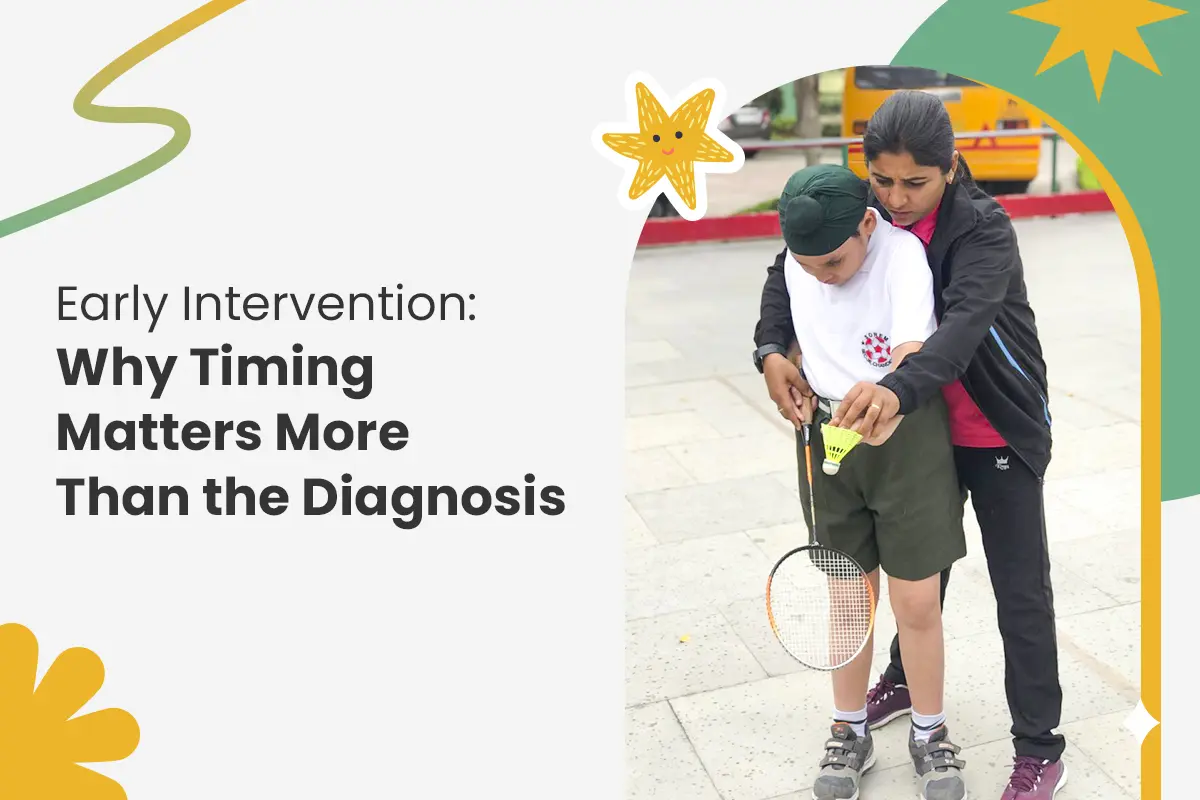
At Sorem Special Children School, one of the most important truths we share with families is this: timing matters more than the label. Early intervention can begin even before a formal diagnosis is confirmed — and in many cases, it should.
Why Parents Wait for a Diagnosis
It is natural to want certainty. A diagnosis feels like clarity. It provides a name, a framework, and sometimes even relief.
Parents may wait because:
- They are advised to “give it time”
- They hope the child will “catch up” naturally
- They fear the emotional impact of a label
- They feel overwhelmed by medical processes
While diagnosis has value, development does not pause while we wait for confirmation.
What Is Early Intervention?

Early intervention refers to therapeutic and educational support provided during the early developmental years — typically between birth and six years of age. This is a period when the brain is highly adaptable and responsive to learning.
Early intervention may include:
- Speech therapy
- Occupational therapy
- Behavioural support
- Structured educational programs
- Parent guidance and coaching
It is not dependent on a definitive label. It is based on observed developmental needs.
Why Timing Is So Critical
The early years of a child’s life are marked by rapid neurological development. The brain forms connections at a pace that slows with age. When support is introduced during this period, it strengthens pathways that support communication, regulation, and learning.
Early support helps:
- Improve language development
- Enhance social engagement
- Reduce frustration and behavioural challenges
- Build foundational life skills
- Increase future learning readiness
Delaying support in hopes of certainty may unintentionally delay growth.
Intervention Does Not Mean Permanent Labeling

One of the biggest fears parents carry is that starting intervention will permanently define their child.
At Sorem, we gently reassure families that support does not create limitation — it creates opportunity.
Receiving early therapy does not mean:
- The child will always require intensive support
- A permanent diagnosis is guaranteed
- Expectations must be lowered
In many cases, early support reduces the need for more intensive intervention later.
The Difference Between “Waiting” and “Watching”
There is a difference between passive waiting and active observation.
Passive waiting assumes time alone will resolve concerns.
Active observation means monitoring development while providing structured support.
Parents can:
- Track milestones
- Seek professional developmental assessments
- Begin therapy if needed
- Stay engaged in communication with educators
This balanced approach allows growth to begin immediately.
Common Signs That Should Not Be Ignored
While every child develops at their own pace, some signs indicate that professional guidance may be beneficial.
Parents may consider early intervention if:
- Speech is significantly delayed
- Social engagement is limited
- Emotional regulation is consistently difficult
- Sensory sensitivities interfere with daily life
- Learning challenges are noticeable
Trusting parental instincts is often the first and most important step.
The Emotional Weight of Acting Early
Acting early requires courage. It involves acknowledging uncertainty and stepping into unfamiliar territory. Parents may fear judgement or stigma.
At Sorem, we believe seeking support is not a sign of alarm — it is a sign of responsibility. Choosing intervention early reflects awareness, not weakness.
It says:
“My child deserves support now, not later.”
Early Intervention Strengthens Families Too
Early support does not only benefit the child. It also provides guidance and structure for families.
Intervention helps families:
- Understand their child’s needs
- Develop consistent routines
- Reduce confusion and frustration
- Feel more confident in decision-making
Clarity reduces anxiety.
Diagnosis Still Has Its Place
A formal diagnosis can provide direction, eligibility for services, and structured planning. However, diagnosis should not be the starting line for support.
At Sorem, we often tell families:
Support can begin with observation.
The label may come later. Growth does not need to wait.
A Perspective from Sorem Special Children School
We have seen firsthand how early intervention transforms developmental trajectories. Children who receive timely support often build stronger communication skills, emotional regulation, and independence.
Our approach focuses on:
- Identifying needs early
- Creating individualised plans
- Supporting families through clarity and compassion
- Measuring progress through growth, not comparison
The earlier we begin, the stronger the foundation becomes.
A Gentle Message to Parents
If you are noticing something that feels different about your child’s development, trust that instinct. Seeking evaluation or support does not mean something is “wrong.” It means you are attentive and proactive.
You do not need to wait for certainty to offer support.
You do not need a label to begin building skills.
You only need awareness and willingness to act.
At Sorem Special Children School, we believe timing is powerful. Early steps, even small ones, can shape a child’s future in meaningful ways.