You’ve heard it more than once. From a well-meaning relative. From a friend whose child turned out just fine. Maybe even from a doctor who told you to give it more time.
“Every child develops at their own pace.”
And that’s true. But there’s a difference between a child who needs a little more time — and a child who needs a little more support. The ‘late bloomer’ label, as reassuring as it sounds, can sometimes delay the very help that changes everything.
This post is about learning to tell the difference.
Why the ‘Wait and See’ Approach Feels Safe — But Carries Risk

Waiting feels responsible. It feels like you’re not panicking, not over-diagnosing, not projecting. For many families, choosing to wait is an act of hope.
But research consistently shows that early intervention — before age five for autism, and as early as age four for ADHD — produces significantly better outcomes than support that begins later. The window doesn’t close, but it does narrow.
Every year of waiting without support is a year a child spends struggling to make sense of a world that doesn’t quite fit — without the tools to understand why.
What Are the Early Signs of ADHD and Autism?
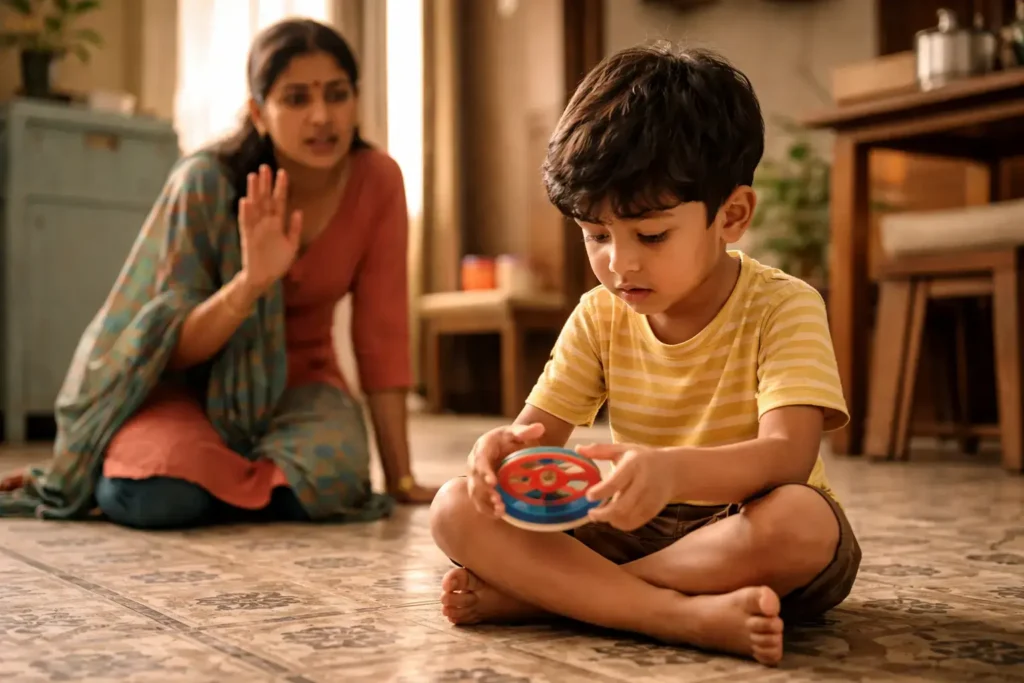
Signs can look different depending on the child’s age, gender, and personality. They are often subtle, and easy to attribute to temperament or shyness or being ‘a bit different’. Here is what to look for, broken down by stage.
In Young Children (under 5):
- Very limited or no response to their name by 12 months
- No pointing, waving, or gesturing by 12 months
- No single words by 16 months, or no two-word phrases by 24 months
- Unusual sensitivity to sounds, textures, or lights
- Repetitive movements or intense attachment to specific routines
- Difficulty making or sustaining eye contact
- Extreme hyperactivity or difficulty staying with any single activity
In School-Age Children:
- Consistent difficulty following multi-step instructions
- Frequently losing items, missing deadlines, or forgetting tasks
- Struggles with friendships that go beyond shyness
- Emotional responses that seem disproportionate to the situation
- Difficulty sitting still or waiting their turn across multiple settings
- Strong preference for sameness; distress when routines change
In Teenagers and Adults:
- A lifelong sense of ‘trying harder’ than everyone else just to keep up
- Social exhaustion — feeling drained after interactions that others find easy
- Difficulty managing time, emotions, or transitions despite repeated effort
- Repeatedly being told they’re ‘too sensitive’ or ‘too much’
- A history of anxiety or depression with no clear underlying cause
ADHD and Autism Often Appear Together

One thing that catches many families off guard: ADHD and autism frequently co-occur. Research suggests that between 30 and 50 percent of autistic children also have ADHD. When one condition is identified and the other is missed, children receive only partial support — and can spend years wondering why things still feel so hard.
If your child has already received one diagnosis but continues to struggle, it may be worth asking whether there is more to the picture.
When Should You Actually Seek Help?

You do not need to wait for a crisis. You do not need a dramatic moment or a school report to act. If any of the following are true, it is worth speaking with a professional:
- You have noticed a pattern — not just a bad week, but a consistent picture over months
- The behaviour is affecting your child’s ability to learn, connect, or feel okay about themselves
- Your instincts are telling you something is off, even if you can’t name it yet
- Teachers, caregivers, or family members are noticing the same things independently
- Your child is clearly working very hard but still falling behind peers in key areas
Your starting point can be a paediatrician, a developmental specialist, or a school counsellor. A conversation costs nothing. A formal assessment, if recommended, gives you clarity — and clarity gives you direction.
Seeking Help Is Not Labelling Your Child
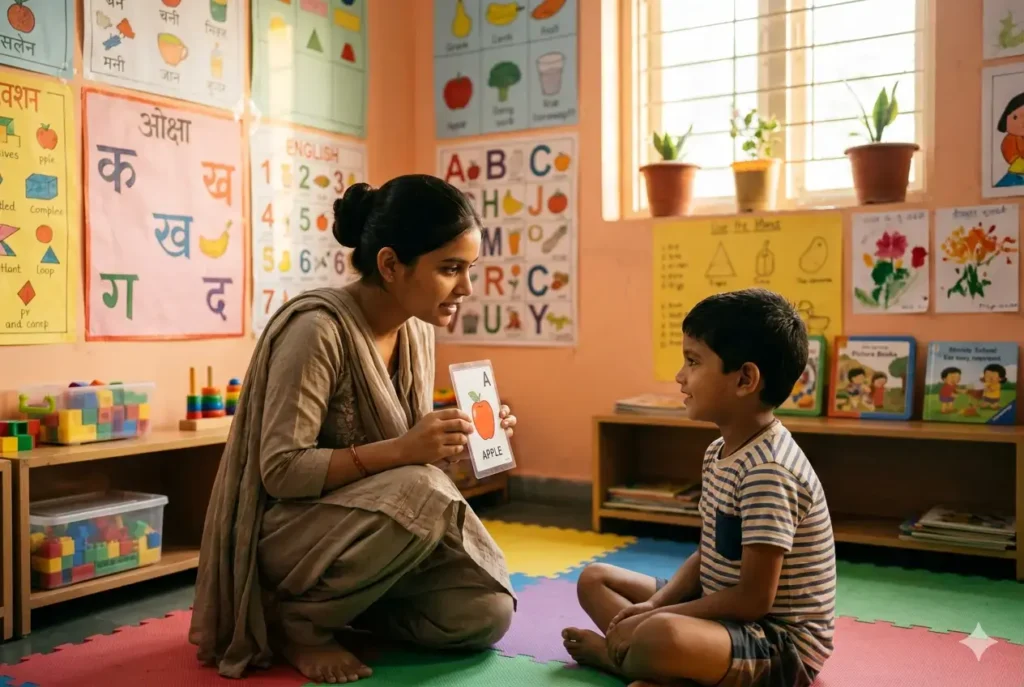
This is the fear that holds many parents back. That a diagnosis will define their child, limit their future, or change how people see them.
In our experience at Sorem Special Children School, the opposite is usually true. A diagnosis doesn’t reduce a child — it reveals them. It explains why certain things are hard. It opens the door to support that is actually designed for how their brain works.
Children who receive early, appropriate support do not just cope better. They build confidence, develop skills, and arrive at adulthood with a much clearer sense of who they are and what they need.
A Final Word for Parents Who Are Not Sure

If you are reading this and feeling that quiet, nagging uncertainty — the one you push aside because you don’t want to be ‘that parent’ — please know: your instincts matter.
Getting a professional opinion is not overreacting. It is not catastrophising. It is doing exactly what a good parent does: paying attention.
Late bloomers are real. And even late bloomers bloom faster with the right support.
If you have concerns about your child’s development, reach out to the team at Sorem Special Children School. We’re here to listen, to help you make sense of what you’re seeing, and to walk with you toward the support your child deserves.