-

- Labyrinth Walk




Improves Focus and Attention
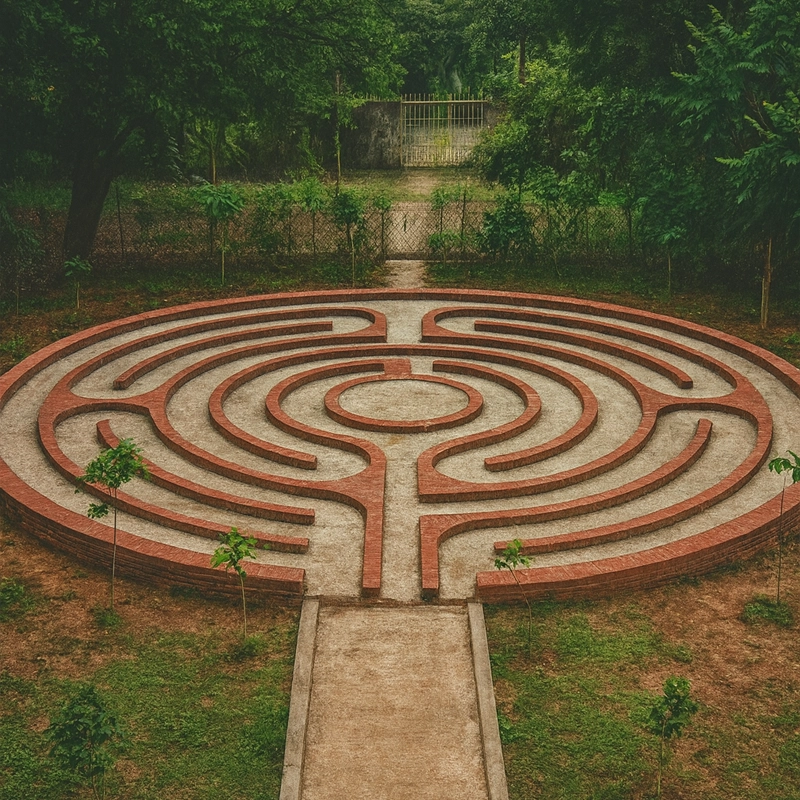
Walking a labyrinth requires following a clear, predictable path. This repetitive movement helps children reduce distractions, stay engaged, and strengthen their attention span.

Enhances Sensory Integration
Children with autism often struggle with sensory overload. The gentle, rhythmic steps in a labyrinth calm the nervous system, making it easier to process sensory information and achieve a state of balance.

Supports Emotional Regulation
The labyrinth creates a safe environment to release stress and anxiety. As children walk slowly, they naturally learn to self-regulate emotions, leading to fewer meltdowns and more confidence.
Boosts Motor Coordination
Following the turns and curves improves balance, body awareness, and muscle coordination—important for children with CP or motor delays.
Encourages Mindfulness and Reflection
Walking toward the center symbolizes inner focus, while walking outward represents release. This simple ritual encourages mindfulness and gives children a sense of achievement after completing the walk.

Inclusive Design
Wide enough for wheelchairs and adaptive mobility needs.

Safe Environment
Supervised by trained therapists and educators.

Holistic Approach
Combines physical activity with emotional and cognitive benefits.

Part of Daily Therapy
Integrated into schedules for consistent developmental progress.