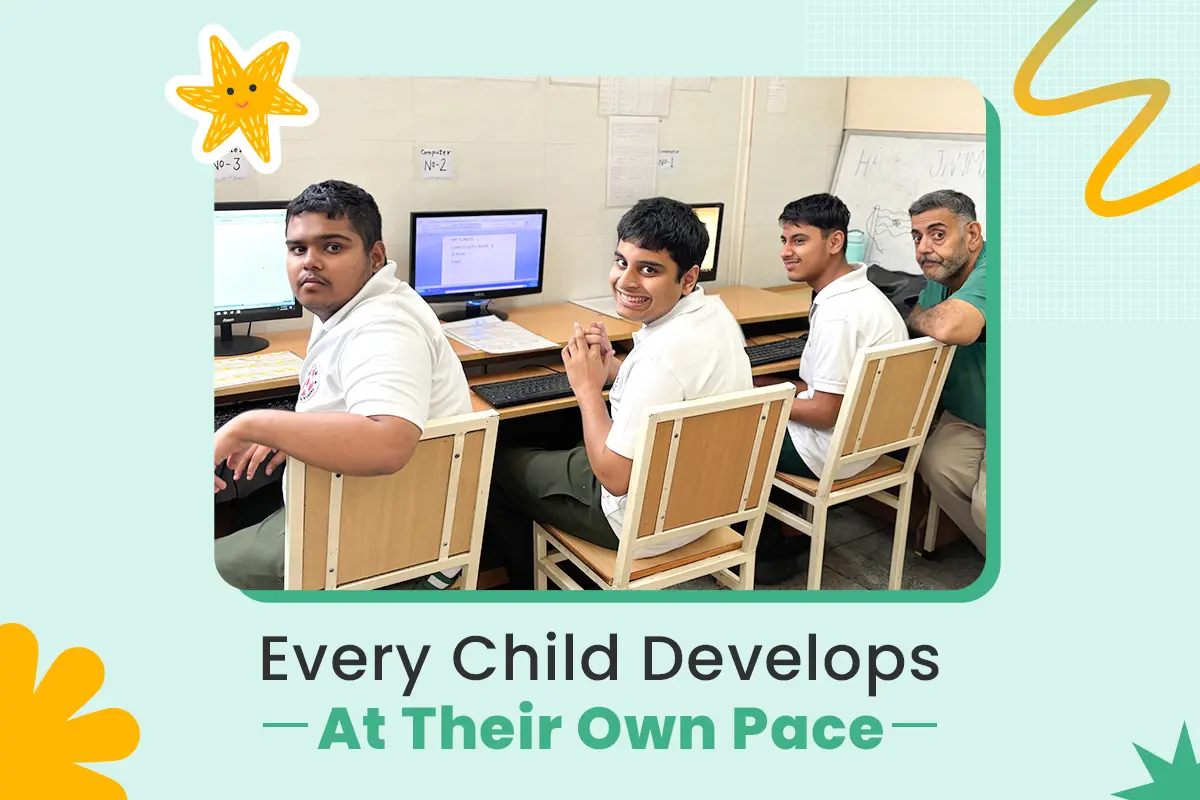
There’s a chart at almost every paediatrician’s office. It tells you when your child should roll over, sit up, say their first word, take their first step. And for a few months, it’s reassuring — a checklist, a roadmap, proof that things are moving in the right direction.
Then one day, your child doesn’t tick the next box on time. And that chart stops feeling like a guide. It starts feeling like a verdict.
If you’ve been there, you know exactly what that feels like. And if you’re there right now — this is worth reading.
Milestones Were Never Meant to Be Deadlines
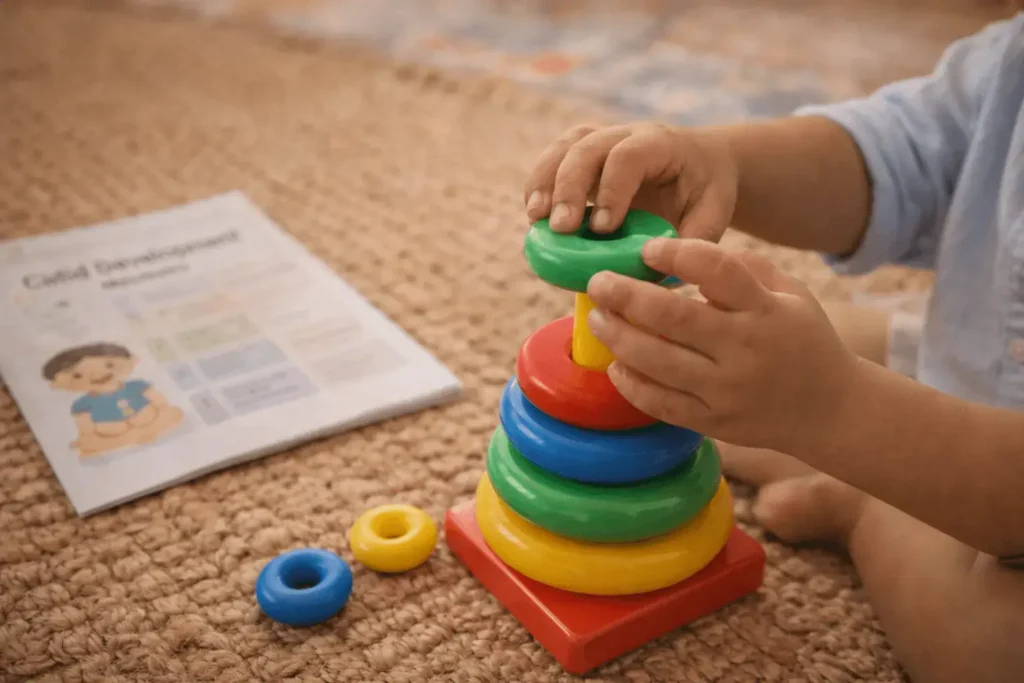
Developmental milestones were created as observation tools, not pass/fail tests. They describe what most children can do within a certain age range — and “most” is doing a lot of work in that sentence.
A milestone that says “walks by 12 months” actually means somewhere between 9 and 15 months is completely typical. The chart just doesn’t show you the range. It shows you the middle, and quietly drops everything on either side.
That gap between what’s printed and what’s normal causes enormous, unnecessary anxiety for parents.
Milestones are useful. But they are ranges, not deadlines. Indicators, not verdicts
No Two Children Develop at the Same Pace — Here’s Why
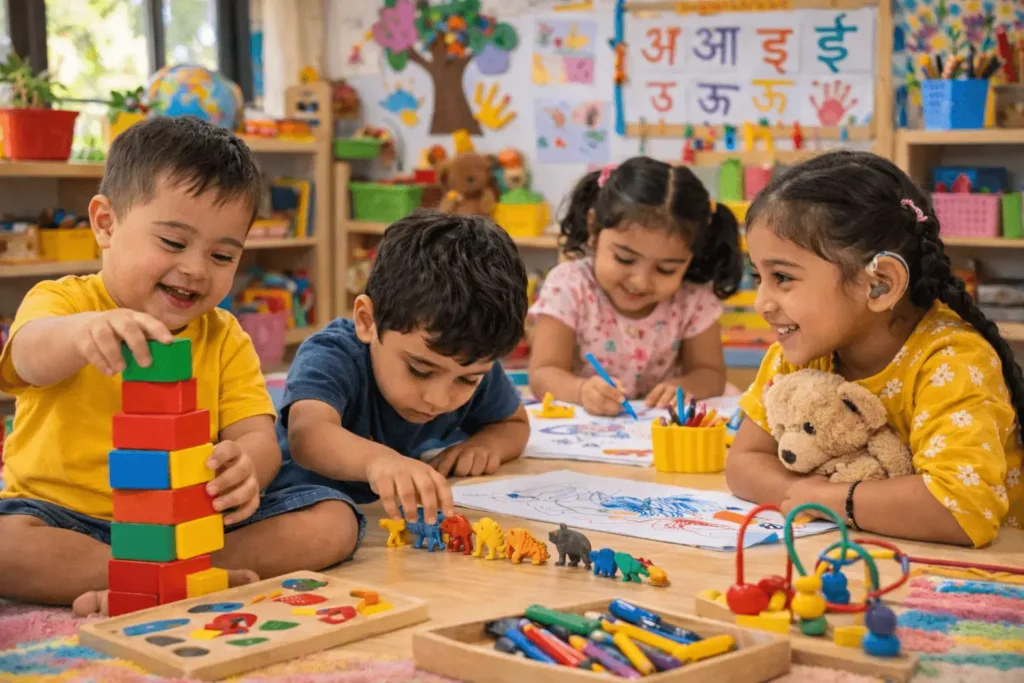
Development isn’t driven by one thing. It’s shaped by genetics, temperament, environment, sensory processing, health, early experiences, and dozens of other factors working together in ways that are different for every child.
Some children talk early and walk late. Some walk confidently at ten months and don’t string two words together until they’re two and a half. Some are socially warm but struggle with fine motor tasks. Others are physically advanced but need more time to process new environments.
None of these patterns are wrong. They’re just individual.
Expecting every child to reach every milestone at the same time is a bit like expecting every adult to get their first job, get married, or buy a house at the same age. Life doesn’t work that way. Neither does development.
What Comparison Does to Parents — and to Children
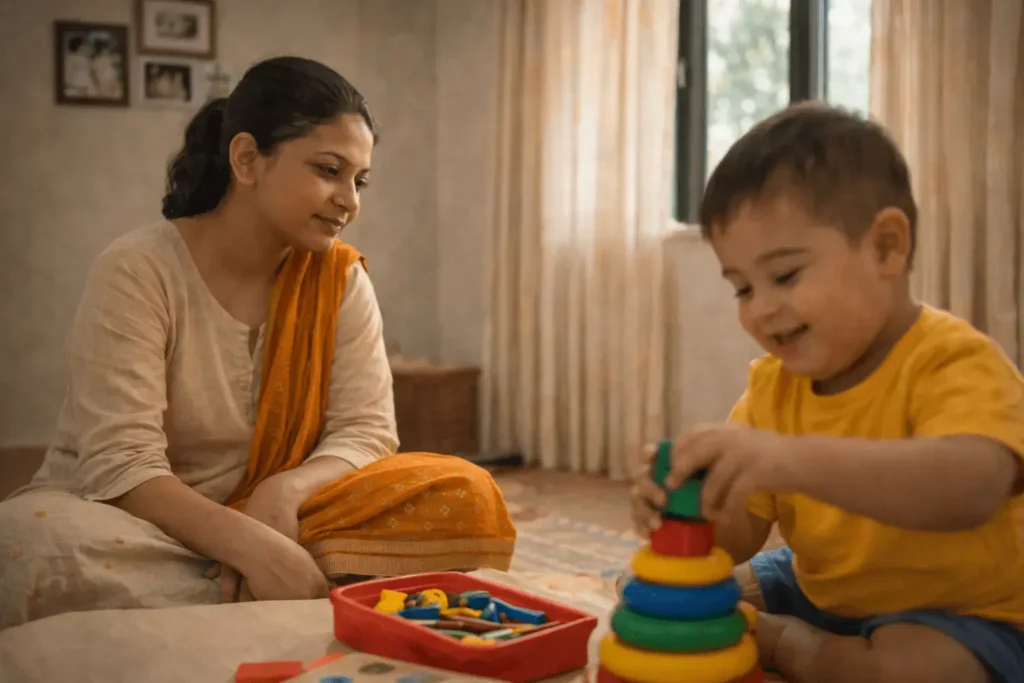
The comparison trap is easy to fall into. A cousin the same age is already reading. A classmate is speaking in full sentences. A neighbour’s child just started riding a bike.
And suddenly you’re not watching your child anymore. You’re measuring them.
When comparison becomes constant, parents start to feel like they’re failing somehow — like the delay is their fault, like they should have done something differently. Children, even very young ones, pick up on that anxiety. They feel the pressure before they can name it.
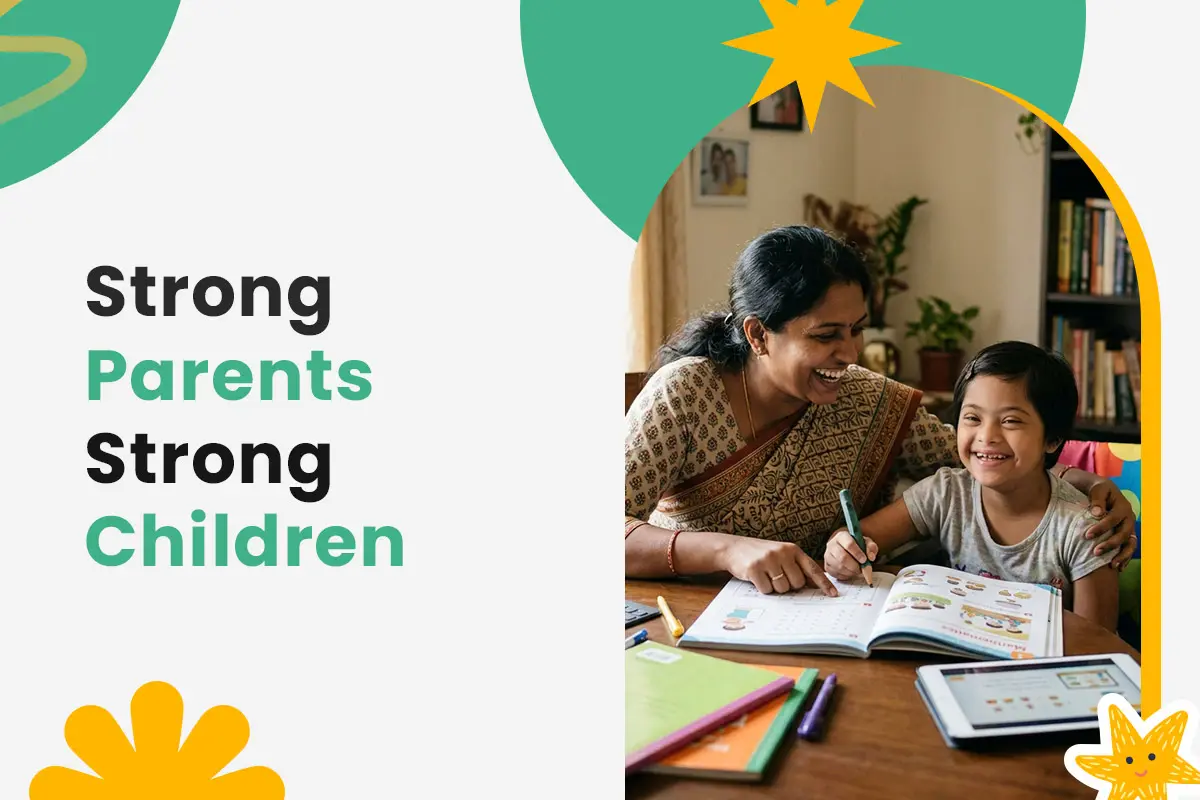
At Sorem Special Children School, we see this pattern regularly. Parents come in exhausted — not just from caregiving, but from the emotional weight of watching their child against everyone else’s child.
Progress measured against someone else’s child tells you almost nothing. Progress measured against your own child’s starting point tells you everything.
Development Doesn’t Always Move in a Straight Line
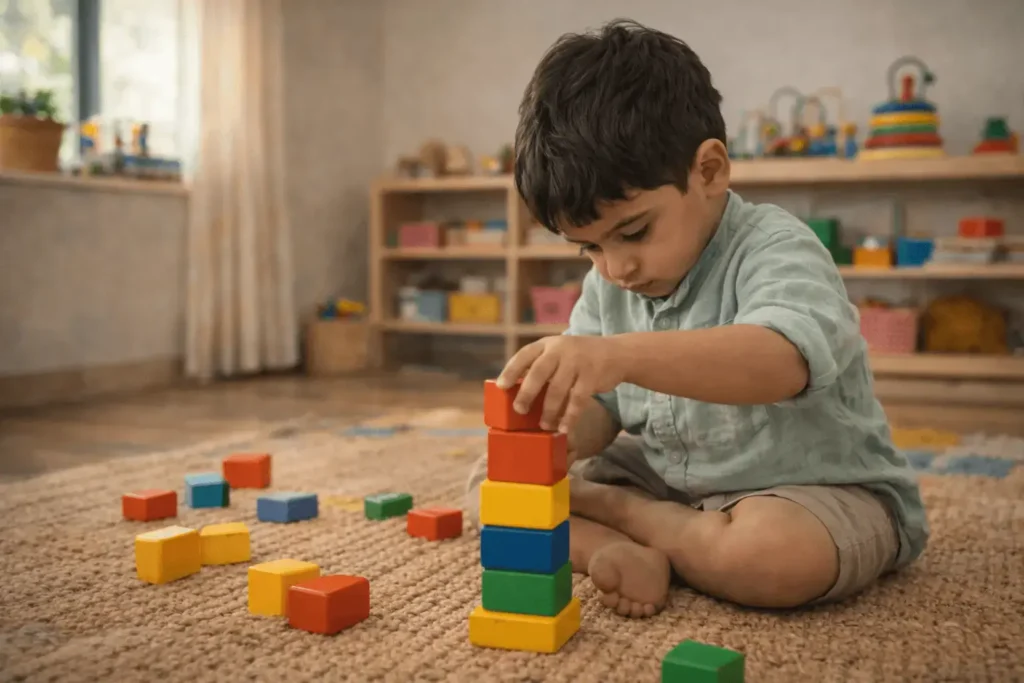
Here’s something the milestone charts definitely don’t show you: development is not linear.
A child can gain five new words in a month and then seem to plateau for weeks. A child working on walking might temporarily lose focus on speech — the brain is busy. A child who seemed socially withdrawn at three might blossom in group settings by five.
These patterns are normal. A plateau is not a regression. A slow period is not a stop.
Non-linear development might look like strong memory alongside delayed speech. It might look like advanced problem-solving paired with difficulty in social situations. It might look like a child who reads fluently but struggles to hold a pencil.
These combinations don’t point to failure. They point to a brain that’s wired differently — which is not the same thing as a brain that’s wired incorrectly.
When Should You Actually Be Concerned?
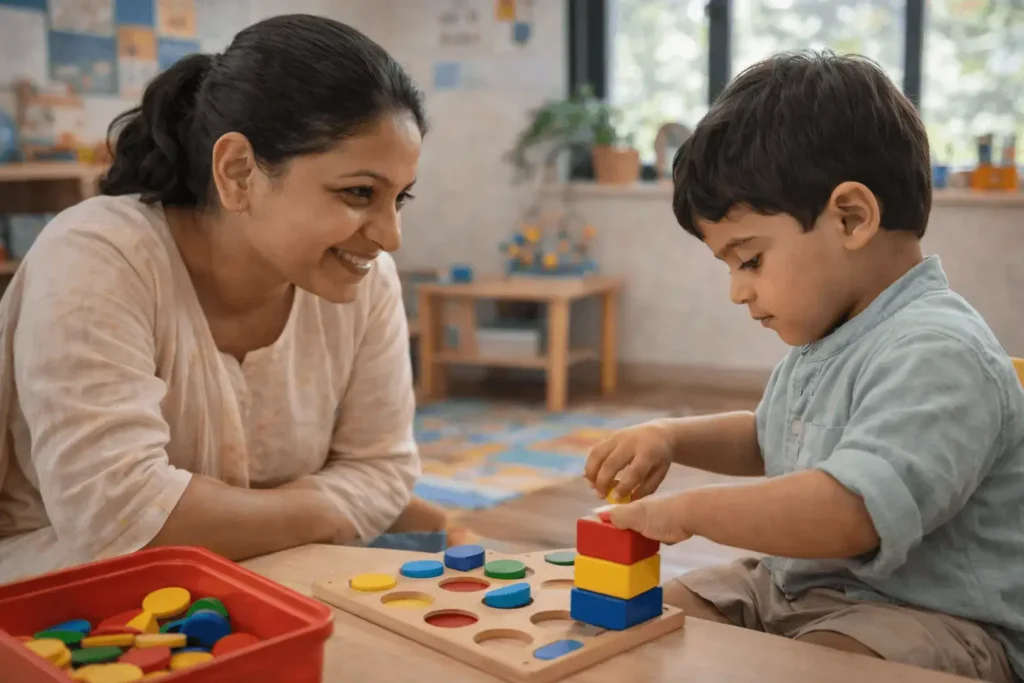
Recognising that development varies is important. But it doesn’t mean concerns should be ignored.
There’s a difference between a child developing at their own pace and a child who may benefit from early support. Here are some signs that it’s worth speaking with a professional:
- Delays that are significant and persist well beyond typical age ranges
- Very limited or no response to their name by 12 months
- Little or no babbling, pointing, or gesturing by 12 months
- No single words by 16 months, no two-word phrases by 24 months
- Consistent difficulty with social engagement — not just shyness
- Loss of previously acquired language or skills at any age
The goal here is not to alarm you. It’s to help you act early if support is needed — because early intervention genuinely changes outcomes.
Noticing something and doing something about it is not overreacting. It’s parenting.
A Better Question Than “Is My Child on Track?”
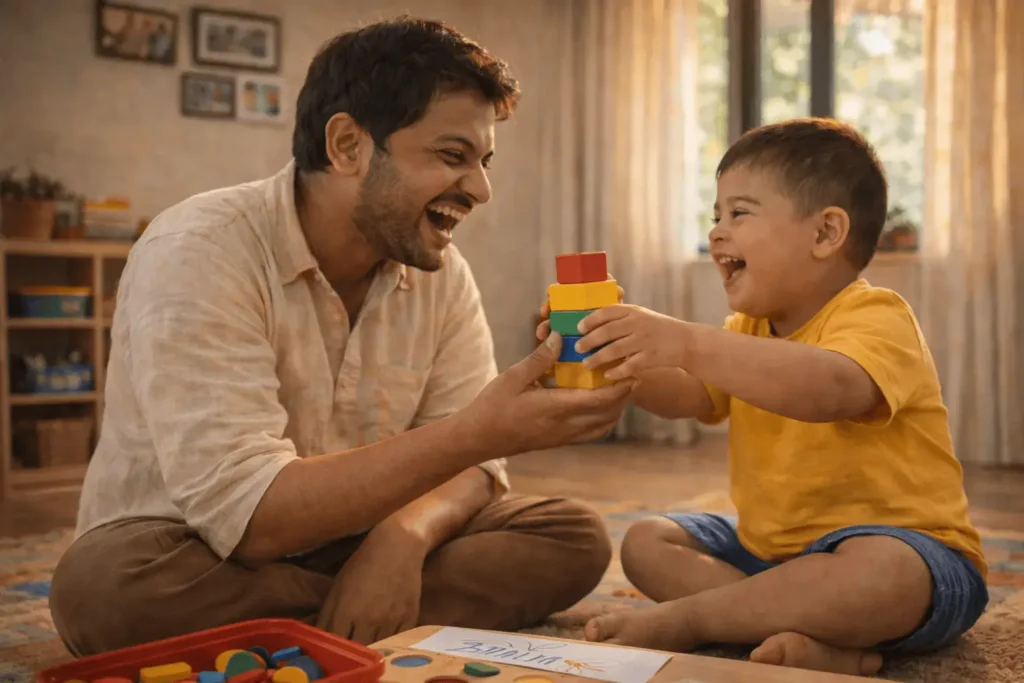
Instead of asking whether your child is hitting milestones on schedule, try asking: is my child growing?
Not compared to last year’s charts. Not compared to the child down the street. Compared to where they were three months ago.
Meaningful growth looks like:
- Trying to communicate more, even if words aren’t there yet
- Becoming more comfortable with routines
- Showing curiosity in new situations
- Managing frustration a little better than before
- Engaging with you and others more consistently
These are not small things. These are the building blocks of everything that comes next.
What Parents Can Do Right Now
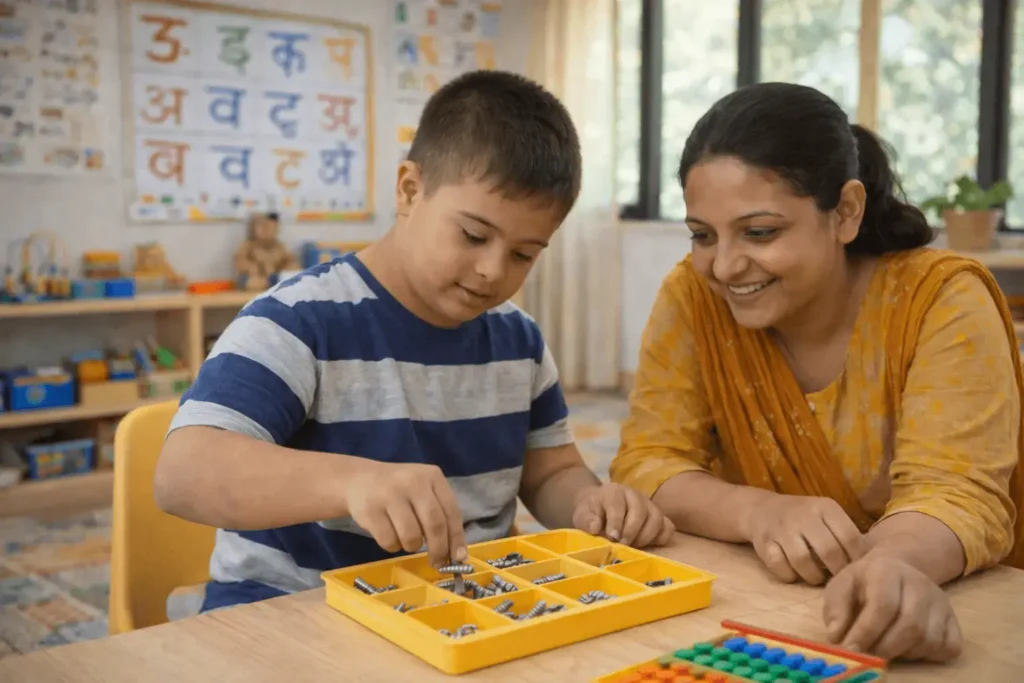
You don’t need a diagnosis to start supporting your child’s development. You need consistency, patience, and the right environment.
A few things that genuinely help:
Follow your child’s lead. What do they show interest in? Start there. Engagement is the doorway to learning.
Build predictable routines. Children who feel safe and know what’s coming next are in a much better position to learn and grow.
Celebrate what they can do. Not what they should be doing. What they actually did today that they couldn’t do last week.
Reduce comparisons out loud. Children hear more than we think. What they hear about themselves becomes part of what they believe about themselves.
Talk to someone early if something feels off. Trust your instincts. Parents notice things. If you’re worried, getting a professional opinion is never a waste of time.
What We Believe at Sorem Special Children School
We don’t measure children against charts. We observe each child over time — how they learn, what they respond to, where they’re building confidence, and where they need more support.
Development looks different for every child we work with. That’s not a problem to solve. It’s a reality to understand and work with.
Timelines are tools for awareness. They are not measures of a child’s worth, intelligence, or potential. A child who reaches a milestone six months late is not behind — they arrived in their own time.
If Your Child Is Developing Differently

Different is not deficient. It never has been.
Your child is not a data point on a chart. They are a person with their own pace, their own strengths, and their own way of making sense of the world. The role of every parent, educator, and therapist around them is to understand that — and to build support around who the child actually is, not who the chart expected them to be.
If you have concerns about your child’s development, reach out to the team at Sorem Special Children School. We’re here to listen, to observe, and to help you find the right path forward — at the right pace, for your child.