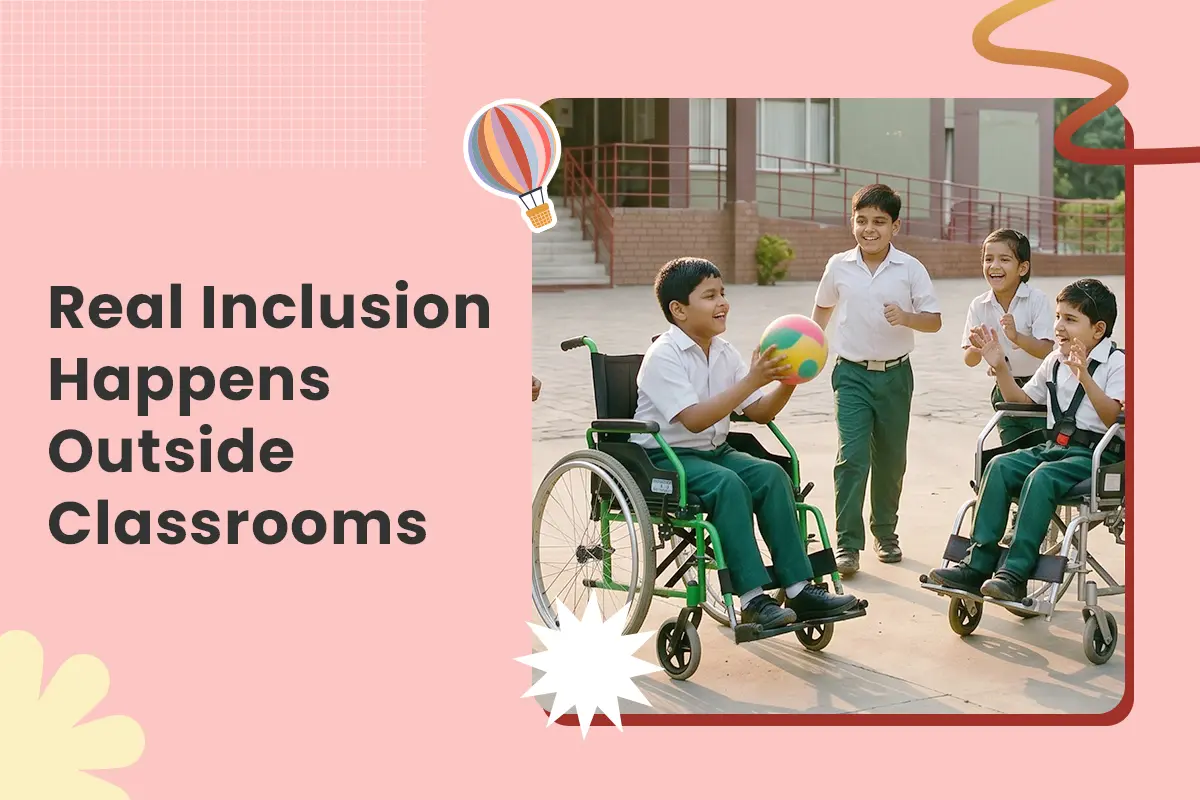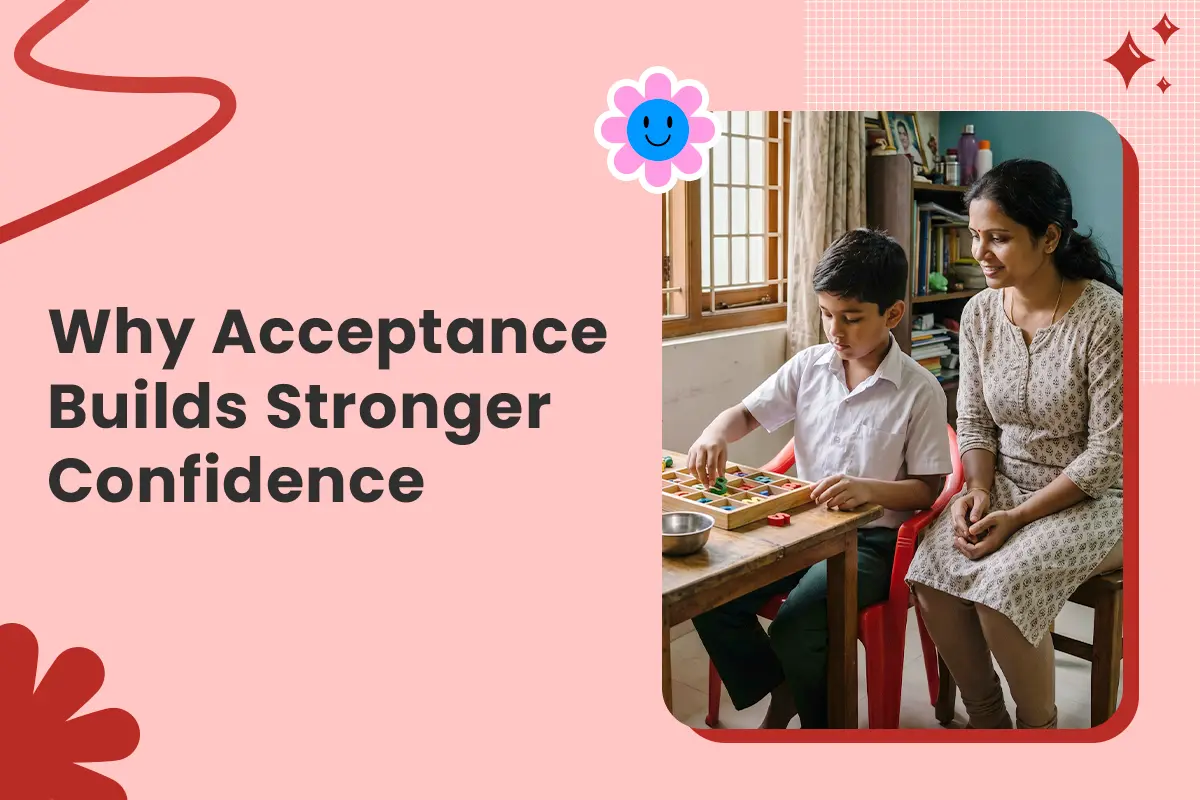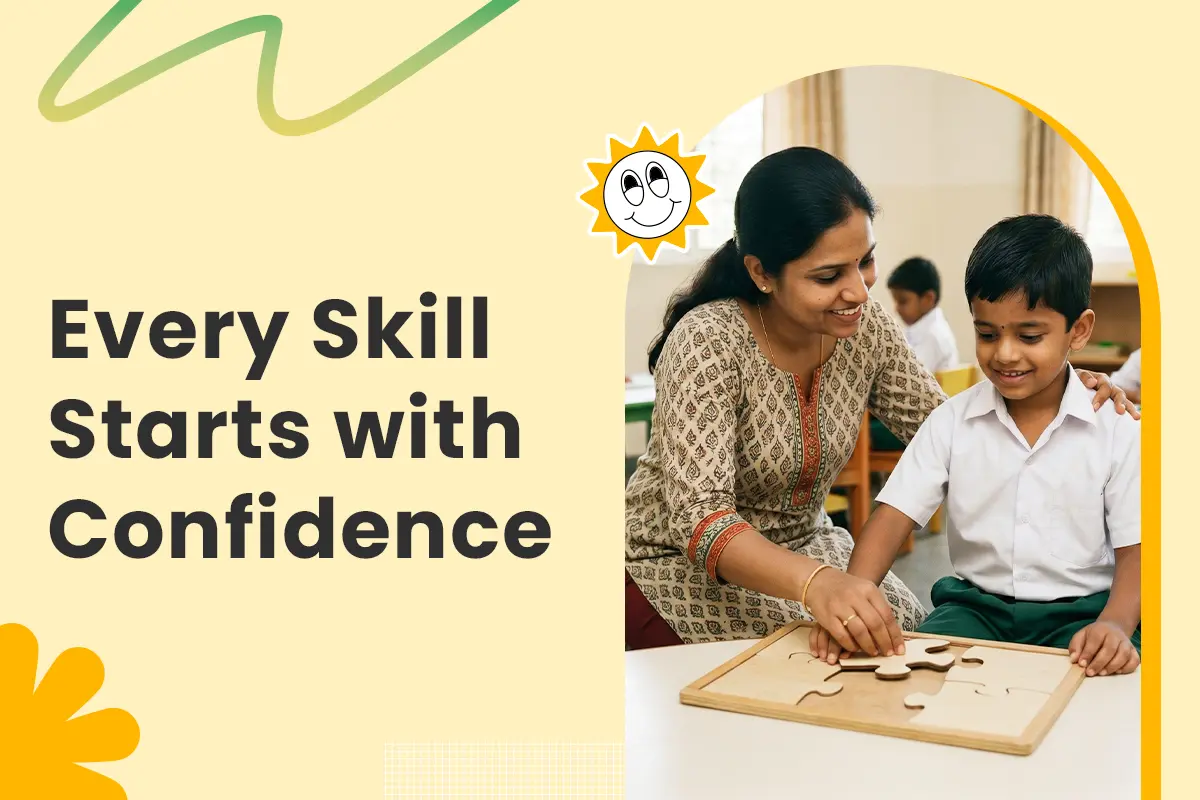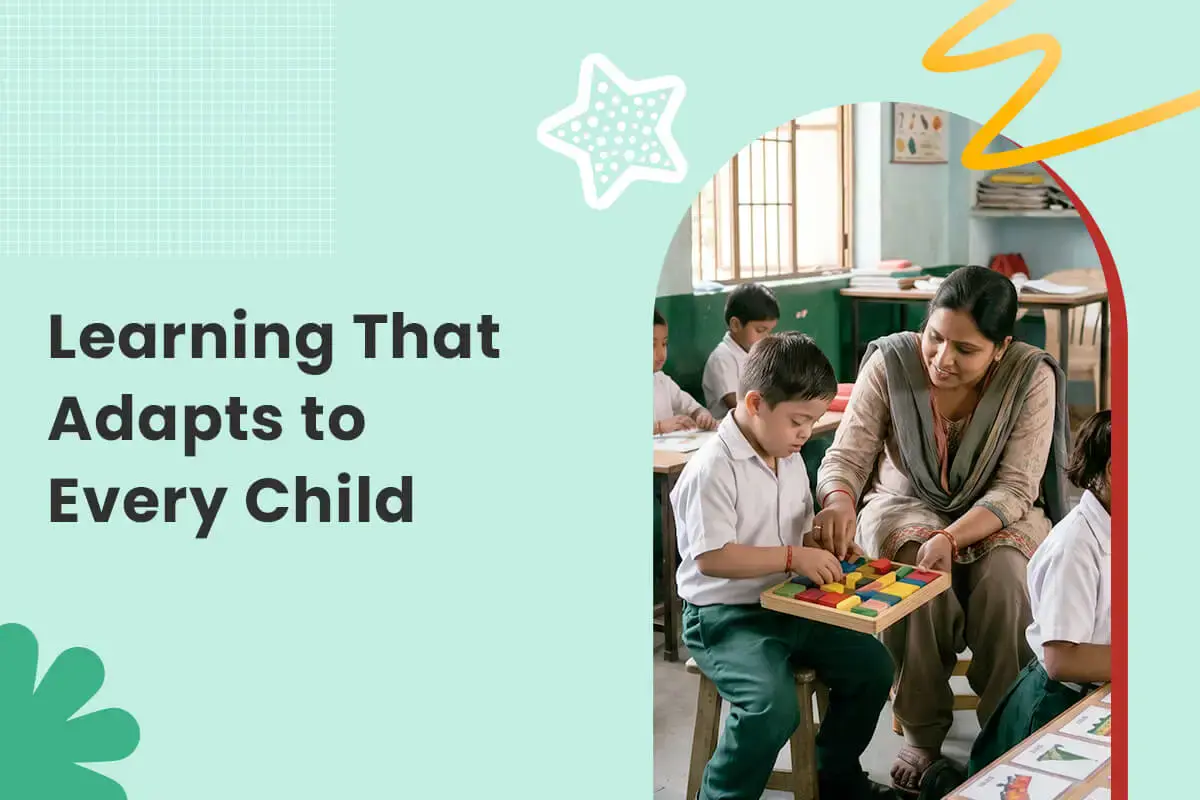
Imagine watching a child who struggles to sit through a structured lesson suddenly light up — focused, joyful, and completely engaged — simply because learning is wrapped in play. That moment captures something educators and child development specialists have known for years: for children with special needs, play isn’t a pause from learning. It is learning.
At Sorem Special Children School, we’ve built our approach around this very understanding. Play-based learning isn’t a soft or secondary strategy for us. It’s a research-backed, intentionally designed framework that nurtures cognitive development, social-emotional learning (SEL), sensory regulation, and emotional resilience — in ways that traditional instruction simply cannot replicate.
Whether your child is navigating autism, ADHD, developmental delays, or sensory sensitivities, play-based education meets them exactly where they are — and takes them further than most people expect.
What Play-Based Learning Actually Means (It’s Not Free Time)
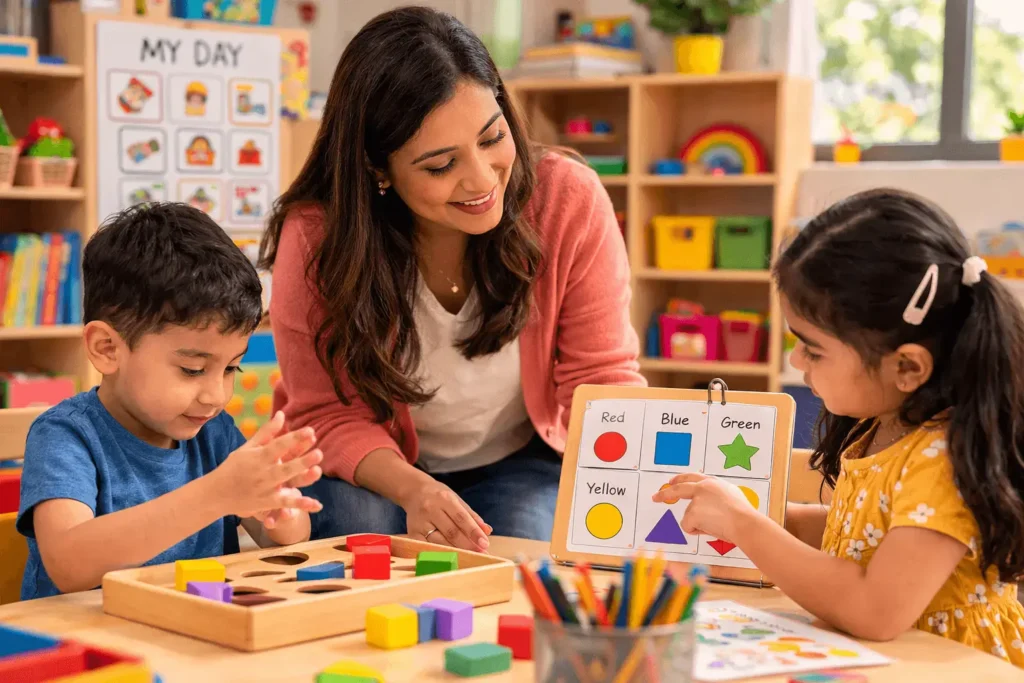
There’s a common misconception worth clearing up right away: play-based learning is not unstructured free time. It is purposeful, educator-guided exploration designed to meet specific developmental and therapeutic goals.
In a play-based learning environment, children are engaging with activities that develop:
- Executive function skills like attention, planning, and problem-solving
- Language and communication through natural, low-pressure interaction
- Emotional regulation and empathy through imaginative and cooperative play
- Sensory integration and fine motor coordination
- Social skills through guided peer interaction
The key difference between play-based learning and unstructured play is intention. Educators observe, guide, and scaffold — creating an environment where children feel free to explore while quietly building the skills they need.
Why Special Needs Children Thrive Through Play
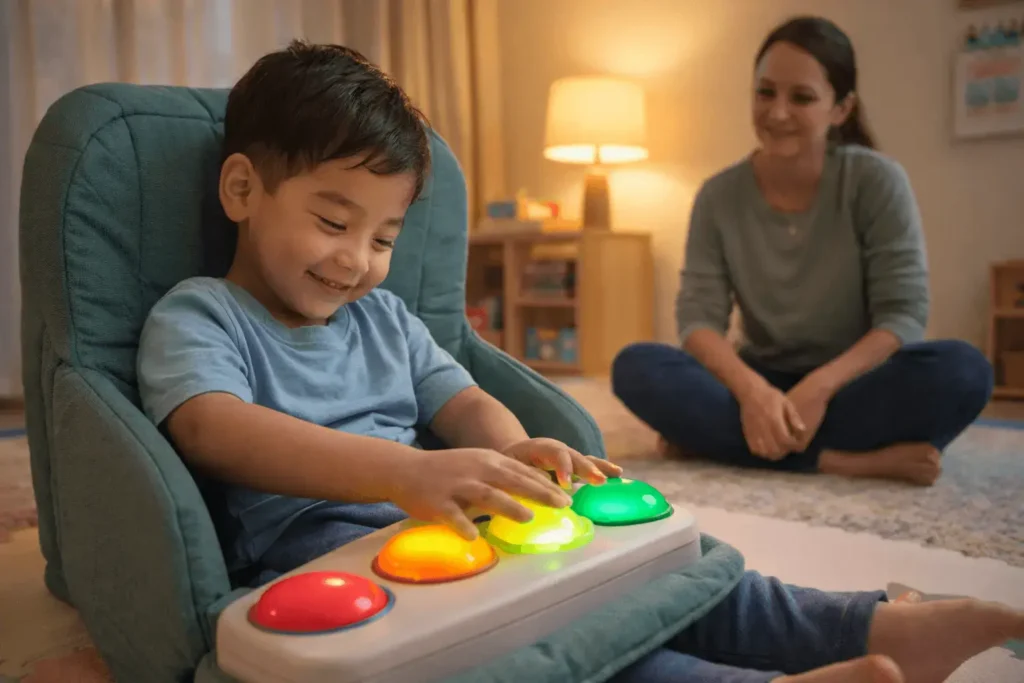
Children with neurodevelopmental differences — including autism spectrum disorder (ASD), attention-deficit/hyperactivity disorder (ADHD), sensory processing challenges, and developmental delays — often experience traditional classroom instruction as overwhelming, restrictive, or inaccessible.
Play naturally removes those barriers. Here’s why it works so powerfully:
- Low-pressure environment: Play feels safe. Children aren’t afraid to try, fail, and try again.
- Repetition without frustration: Children can repeat activities naturally, reinforcing skills without it feeling like drill practice.
- Intrinsic motivation: When children choose or enjoy an activity, their engagement is genuine — and learning sticks.
- Flexible pacing: Play adapts to each child’s readiness without forcing a universal timeline.
This is child-led learning at its best — structured enough to guide development, open enough to honor each child’s unique rhythm.
Play and Cognitive Development: Building the Brain Through Experience
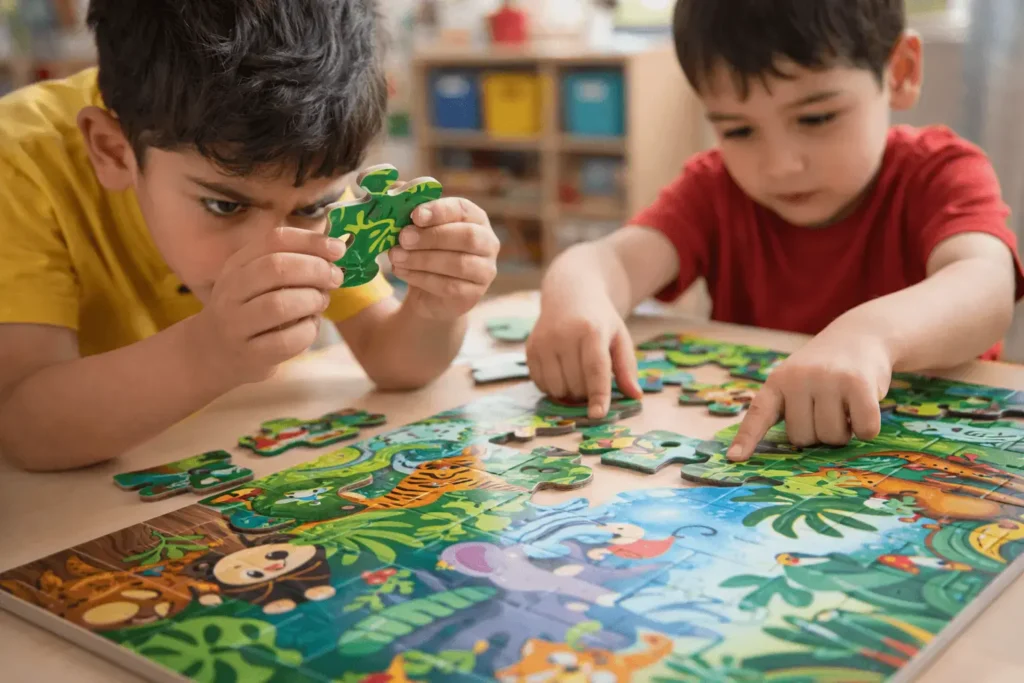
Cognitive development — the growth of thinking, reasoning, memory, and problem-solving abilities — doesn’t happen in isolation. It’s built through experience, repetition, and exploration. Play-based learning is the perfect engine for this.
Here’s how specific types of play strengthen cognitive skills:
- Building blocks and construction play: Develops spatial reasoning, planning, and visual-motor integration
- Sorting and categorisation games: Builds logical thinking and early numeracy foundations
- Pretend and imaginative play: Supports sequencing, narrative reasoning, and flexible thinking
- Puzzle-solving and strategy games: Grows persistence, working memory, and executive function
- Cause-and-effect exploration: Reinforces scientific thinking and curiosity
When children manipulate objects, experiment with outcomes, and make real-time decisions during play, they are forming and strengthening neural pathways that lay the groundwork for academic readiness — without a single worksheet in sight.
Improving Attention and Focus in Children with ADHD Through Play
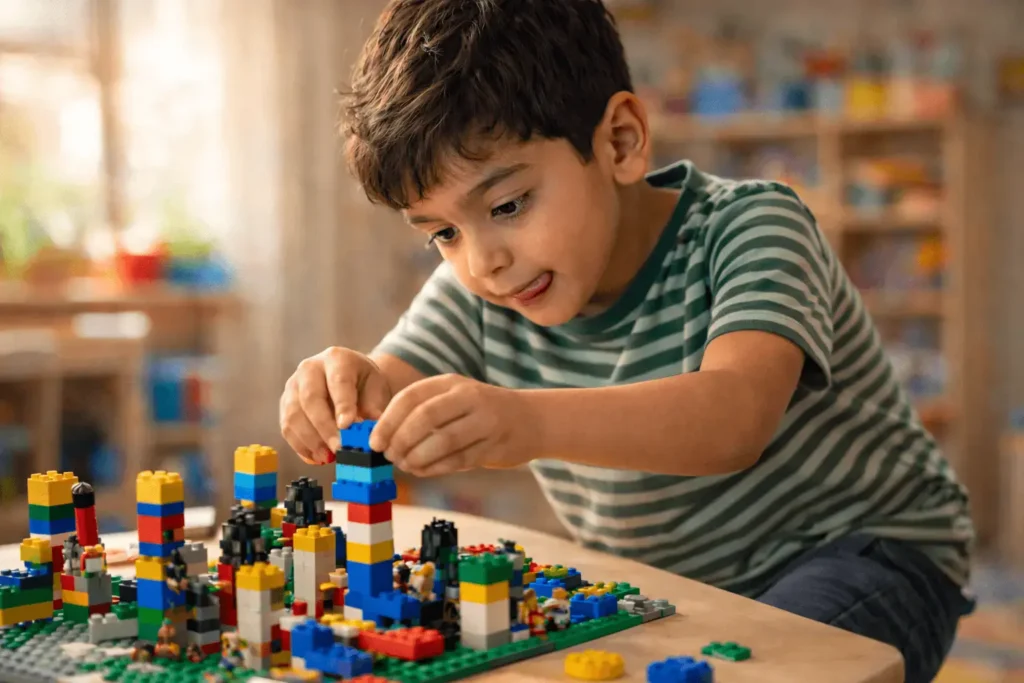
One of the most significant challenges for children with ADHD or attention difficulties is sustaining focus on tasks that don’t feel immediately rewarding. Traditional classroom settings often exacerbate this struggle.
Play changes the equation. Purposeful play activities:
- Capture natural interest and sustain motivation
- Provide immediate, satisfying feedback
- Incorporate movement — a critical need for many attention-challenged learners
- Reduce cognitive load by embedding skill-building within enjoyable activity
At Sorem, we regularly observe children who resist structured table tasks showing remarkable sustained attention during purposeful, play-based activities. This isn’t a trick — it’s neuroscience. Engagement activates the brain’s reward system, making focus natural rather than forced.
Social-Emotional Learning (SEL) Through Play
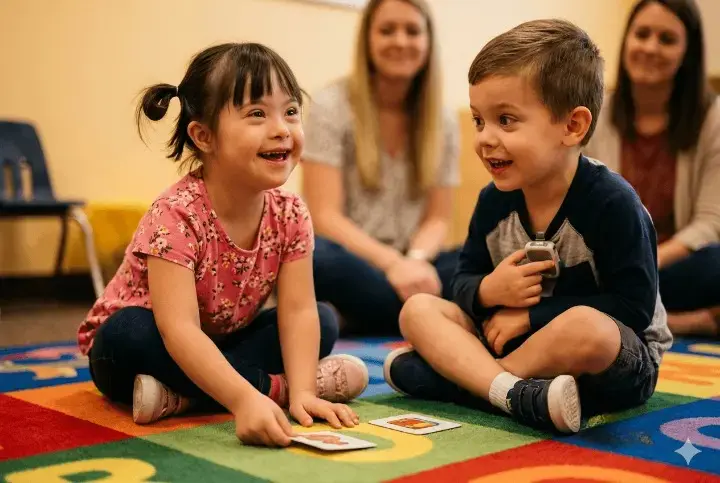
Social-emotional learning — the ability to understand emotions, manage feelings, and navigate relationships — is as critical to long-term wellbeing as any academic skill. For children with special needs, SEL development is often a primary goal.
Play provides the ideal setting for this growth. Through cooperative games, role-playing, and peer interaction, children practice:
- Turn-taking and patience — foundational social skills often challenging for children on the spectrum
- Empathy and perspective-taking — understanding how others feel
- Emotional expression — finding safe, appropriate ways to communicate feelings
- Conflict resolution — navigating disagreement within a supportive environment
- Frustration tolerance — managing setbacks without shutting down
Role-play scenarios and group games allow children to rehearse real social situations in a low-stakes, supported setting — building confidence that carries into everyday life.
Building Confidence and Reducing Anxiety
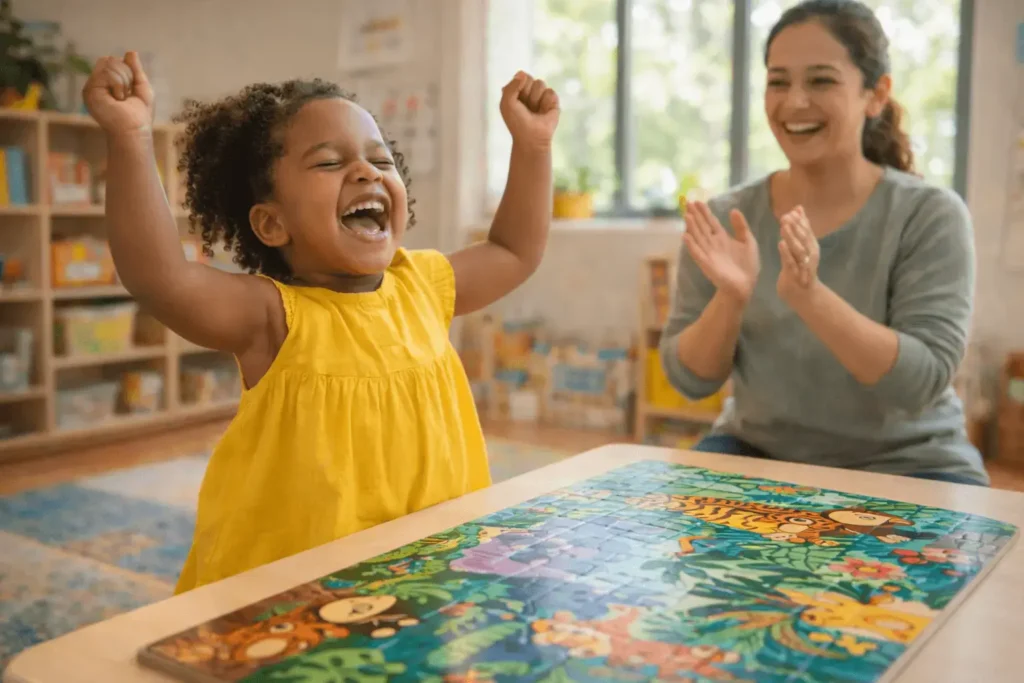
Children with learning differences or developmental delays are often accustomed to struggling. Traditional academic settings can inadvertently reinforce a sense of failure, especially when children are measured against standardized milestones.
Play-based learning reframes success. When a child completes a building challenge, wins a memory game, or contributes to group storytelling, they experience genuine achievement. Over time, this builds:
- A growth mindset — the belief that effort and persistence lead to progress
- Reduced performance anxiety around learning
- Positive associations with school and structured environments
- Willingness to take risks and try unfamiliar tasks
These aren’t small wins. Children who feel capable and confident in play-based settings carry that confidence into other areas of development — including academic learning, therapy sessions, and social interaction.
Sensory Play: Supporting Sensory Integration and Body Awareness
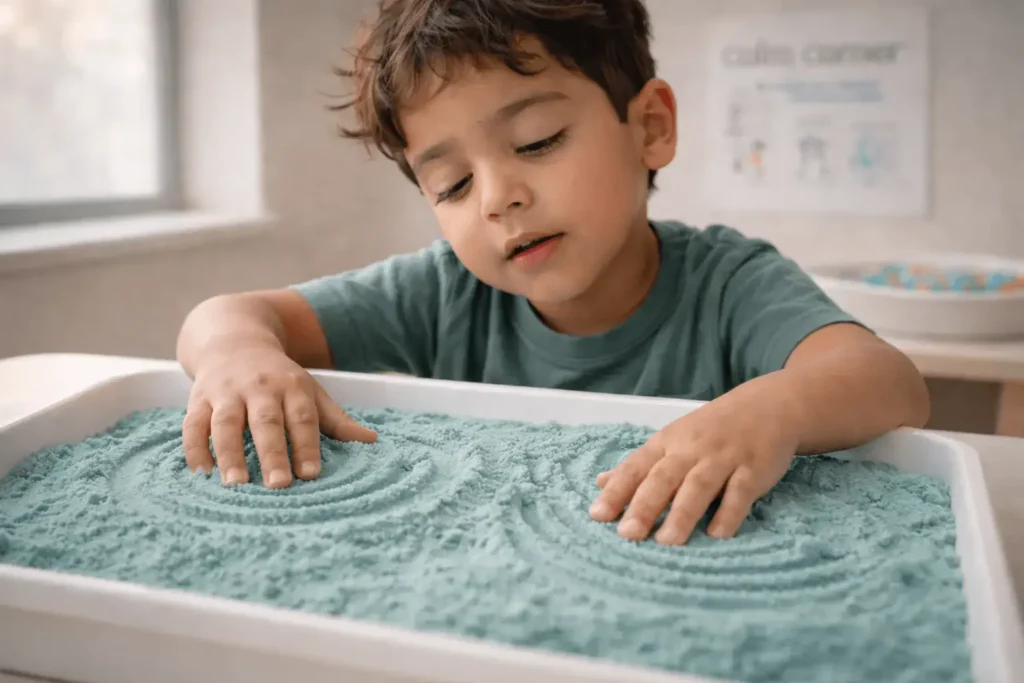
Many children with special needs experience sensory sensitivities — either heightened sensitivity (hypersensitivity) or under-sensitivity (hyposensitivity) to sensory input. Sensory processing differences can make everyday environments overwhelming or understimulating.
Sensory play addresses these needs directly. At Sorem, our sensory play activities include:
- Sand and water play for tactile regulation
- Weighted activities for proprioceptive input and body awareness
- Music, rhythm, and movement for auditory and vestibular integration
- Textured materials for tactile desensitization
- Messy play for tolerating sensory discomfort in a safe context
These experiences, guided by our educators and integrated with occupational therapy goals, help children develop the sensory regulation skills they need to function more comfortably in learning and social environments.
Play as a Bridge Between Therapy and Education
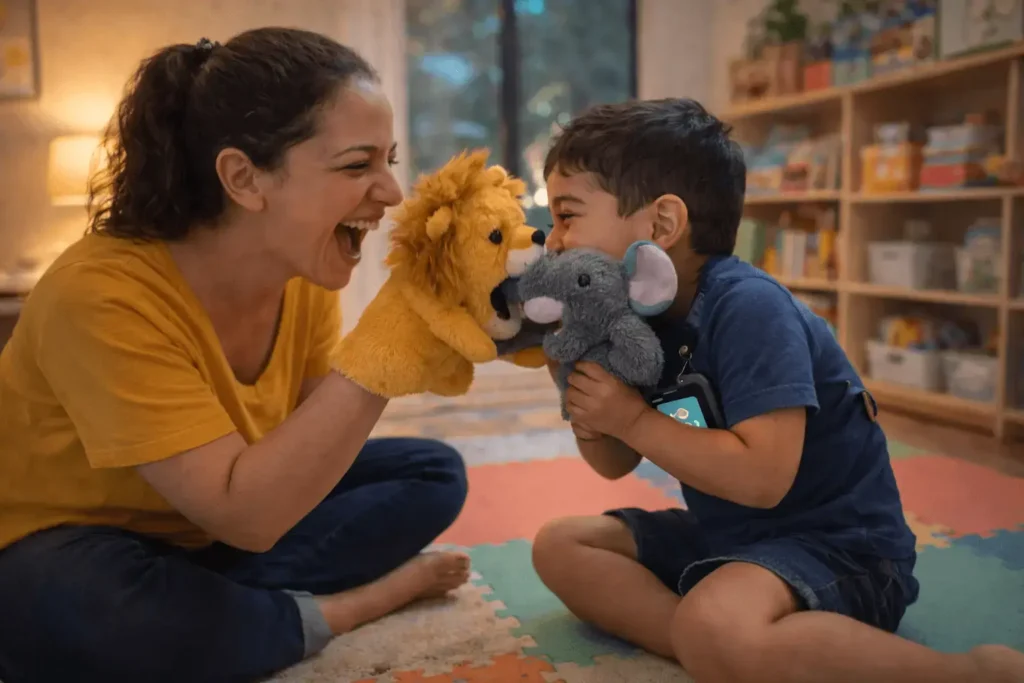
One of the most powerful aspects of play-based learning in special education is its ability to integrate therapeutic goals seamlessly into everyday activity. When therapy feels like play, children’s resistance drops — and their participation soars.
At Sorem, our educators and therapists collaborate to embed therapeutic objectives into structured play:
- Speech therapy goals practiced through storytelling games, puppet play, and interactive reading
- Fine motor skill development through craft activities, clay modeling, and building tasks
- Behaviour strategies reinforced through role-play and cooperative games
- Occupational therapy objectives addressed through sensory stations and movement-based activities
This integration means children aren’t compartmentalizing their learning — they’re building holistic, connected skills across every area of development simultaneously.
The Role of Structured Play: Freedom Within a Framework
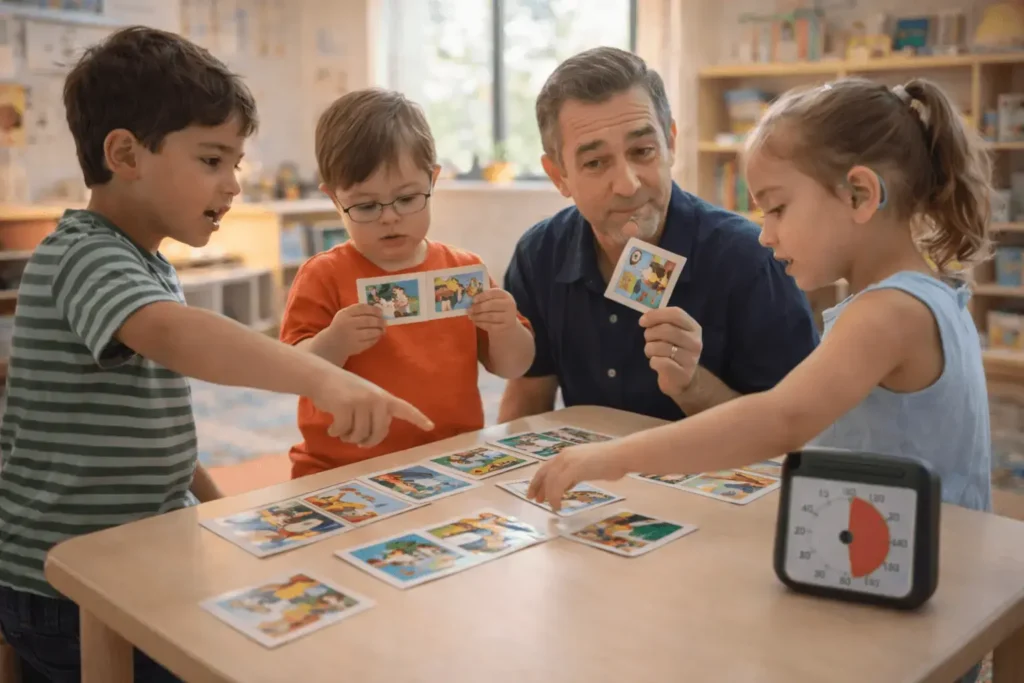
While child-led exploration is valued, structured play ensures that developmental goals are addressed consistently and intentionally. At Sorem, our educators don’t simply observe — they actively guide, prompt, and adjust activities to meet each child’s individual learning plan.
Structured play includes:
- Clear learning objectives aligned with individual education plans (IEPs)
- Guided prompts that scaffold skills without taking over the child’s experience
- Observational assessment that captures genuine progress in naturalistic settings
- Gradual skill-building that introduces increasing complexity as readiness develops
This balance — freedom within a thoughtful framework — is what separates play-based learning from mere entertainment. Children feel autonomous and engaged while educators ensure meaningful progress is happening.
Joy Is a Learning Strategy
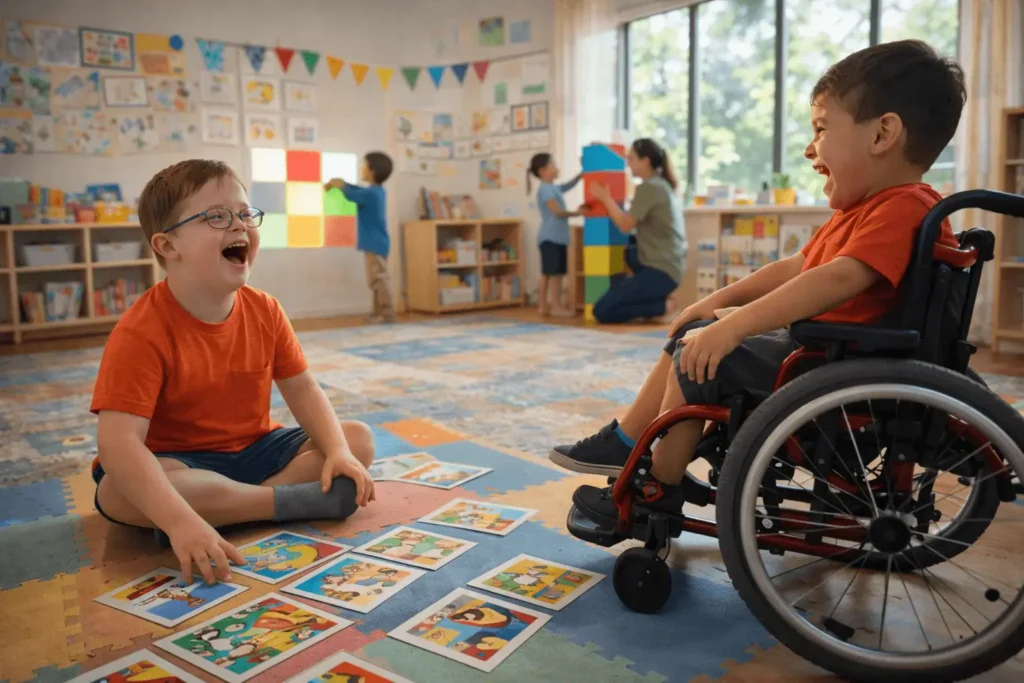
This might be the most important thing we want parents and caregivers to understand: joy is not a reward for learning. Joy is how learning happens.
When children associate their school environment with safety, encouragement, and genuine enjoyment, they develop something that no worksheet can teach — an intrinsic love of discovery. They become children who want to learn, who ask questions, who try new things without fear of failure.
Research in positive psychology and neuroscience consistently shows that positive emotional states enhance memory consolidation, motivation, and cognitive flexibility. Simply put: happy learners are more effective learners.
This is why, at Sorem, the sound of laughter in our classrooms isn’t a distraction. It’s a sign that learning is happening.
Our Approach at Sorem Special Children School
At Sorem, play-based learning is woven into every part of our curriculum — not as an add-on, but as the foundation. Our approach ensures:
- Every child’s individual needs, pace, and learning style are honoured
- Therapeutic and educational goals are integrated, not siloed
- Progress is measured through meaningful growth, not comparison to standardised benchmarks
- Emotional safety is treated as a prerequisite for cognitive learning
- Families are kept informed and involved in their child’s journey
We believe inclusive education means designing learning for every child — not asking every child to fit into a single learning design.
A Message to Parents: Your Child’s Way of Learning Is Valid
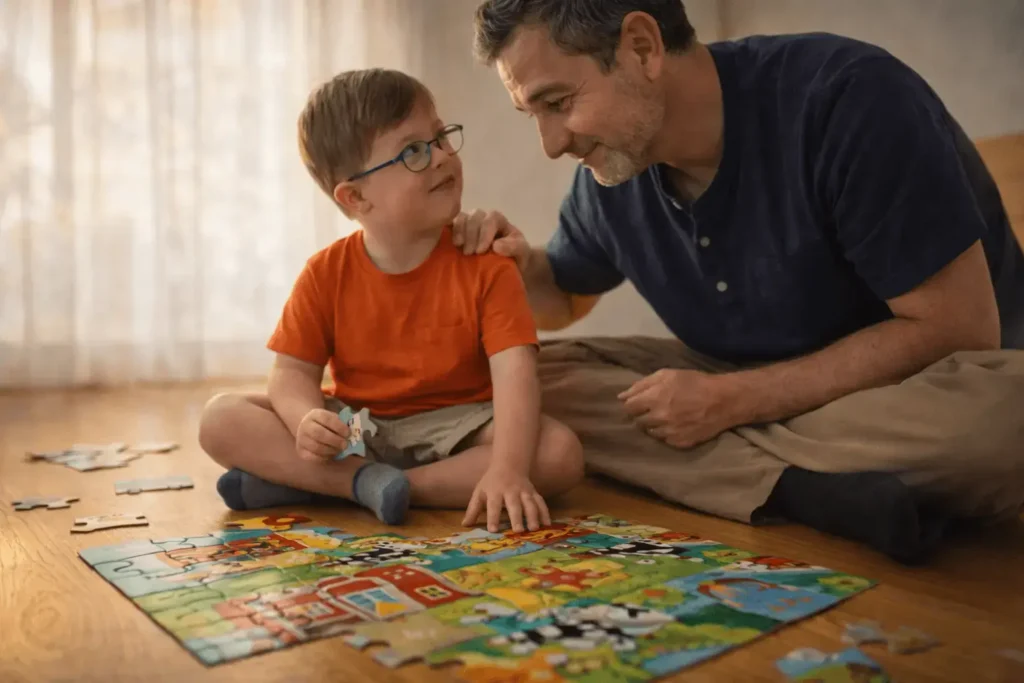
If your child seems to learn best through doing, exploring, building, pretending, or playing — please know that this is not a weakness to overcome. It is a strength to celebrate.
Play-based learning is supported by decades of child development research and is recommended by leading organisations in early childhood and special education worldwide. When your child plays with purpose, they are building the cognitive, emotional, and social foundations that will support them for life.
At Sorem Special Children School, we are proud to honour the way your child learns — because sometimes the most profound learning happens when a child is simply allowed to play