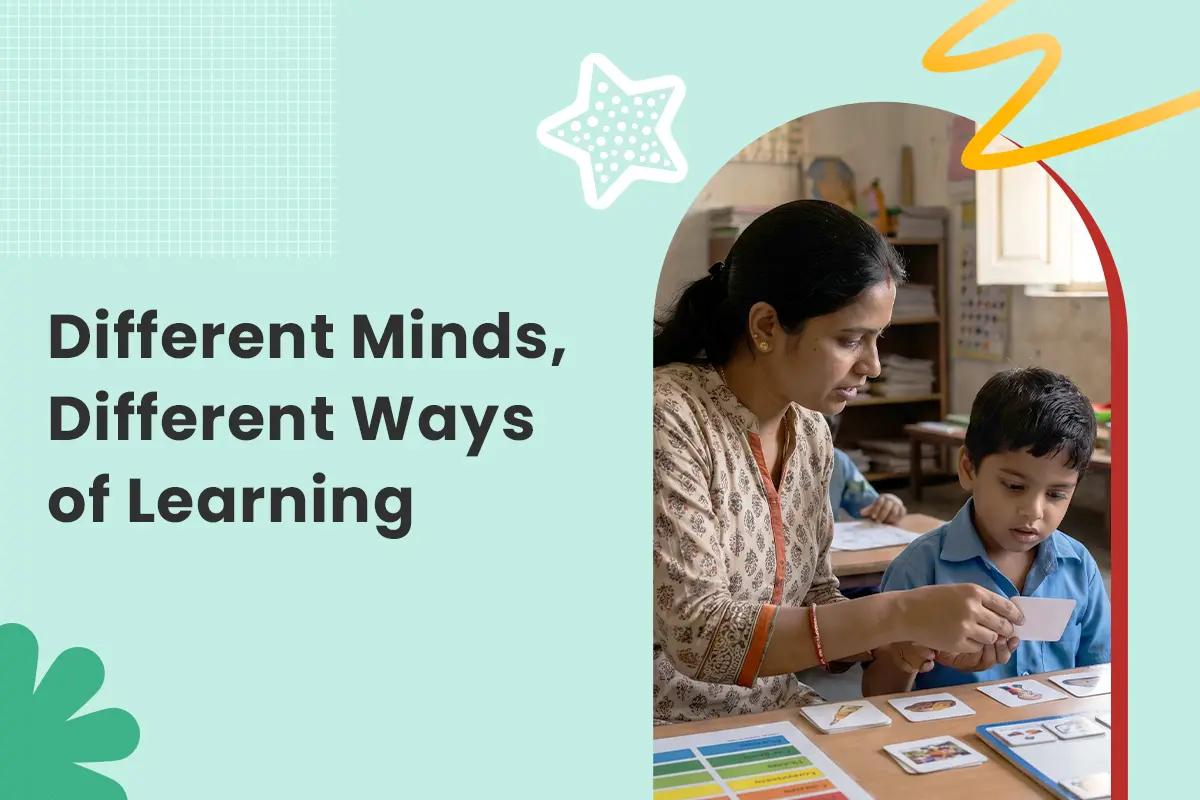
No two children with special needs learn the same way. Good special schools teach one concept through visual, hands-on, auditory, and movement-based methods at once. The IEP (Individualised Education Plan) drives every teaching decision. At SOREM, a 4:1 student-teacher ratio makes real differentiation possible, not just planned.
The child did not fail the method. The method failed the child.
Why one teaching style does not work

A standard classroom assumes a shared learning pace. A child with autism often needs visual structure. A child with Down syndrome may respond best to music and rhythm. A child with cerebral palsy may need extra time and physical support to demonstrate what they know.
Research from Indian schools in Chennai confirmed that differentiated instruction helps autistic children learn meaningfully. But it requires trained teachers applying it consistently, every day.
What differentiated instruction looks like in practice

One concept taught through more than one format. ‘Money’ might be taught through pictures, then real coins at a mock shop, then a counting rhyme, then an actual canteen visit.
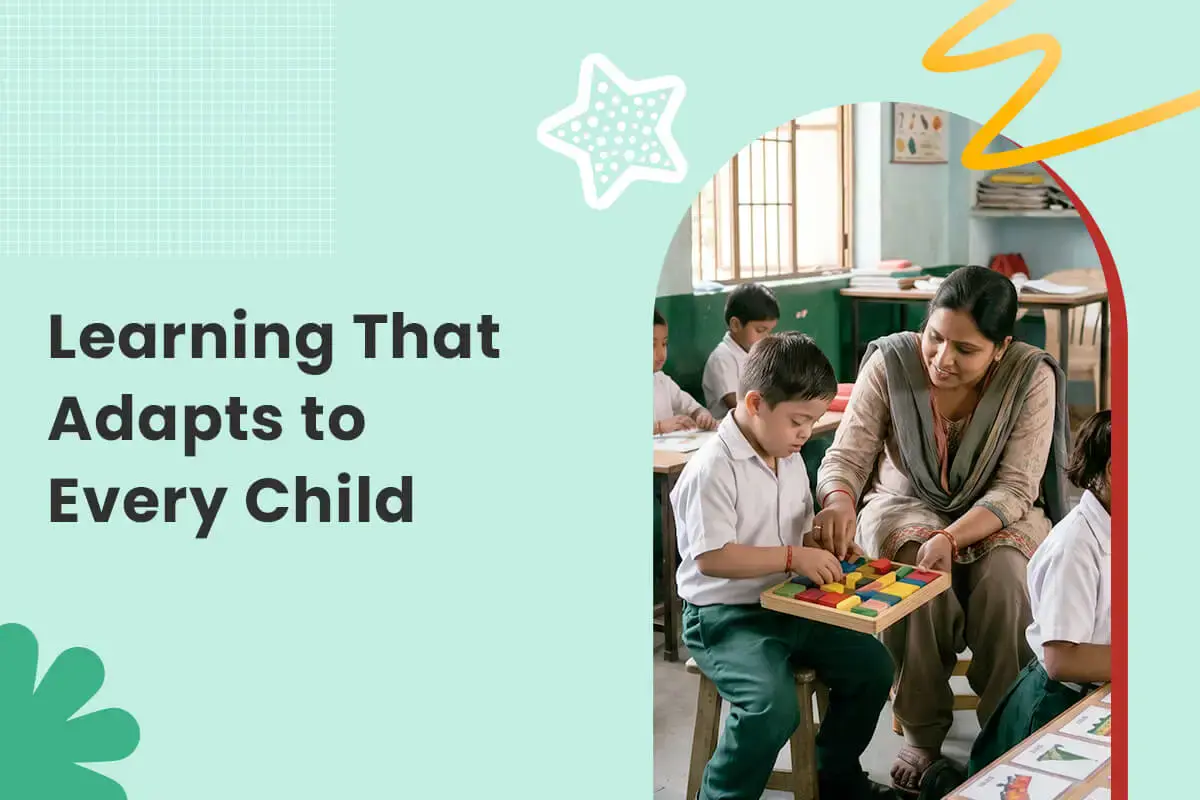
The IEP documents each child’s current level, learning strengths, and best methods. Teachers plan around that profile, not a standard syllabus. At SOREM, 1:1 support is available when needed.
Which learning styles are most common in special education?
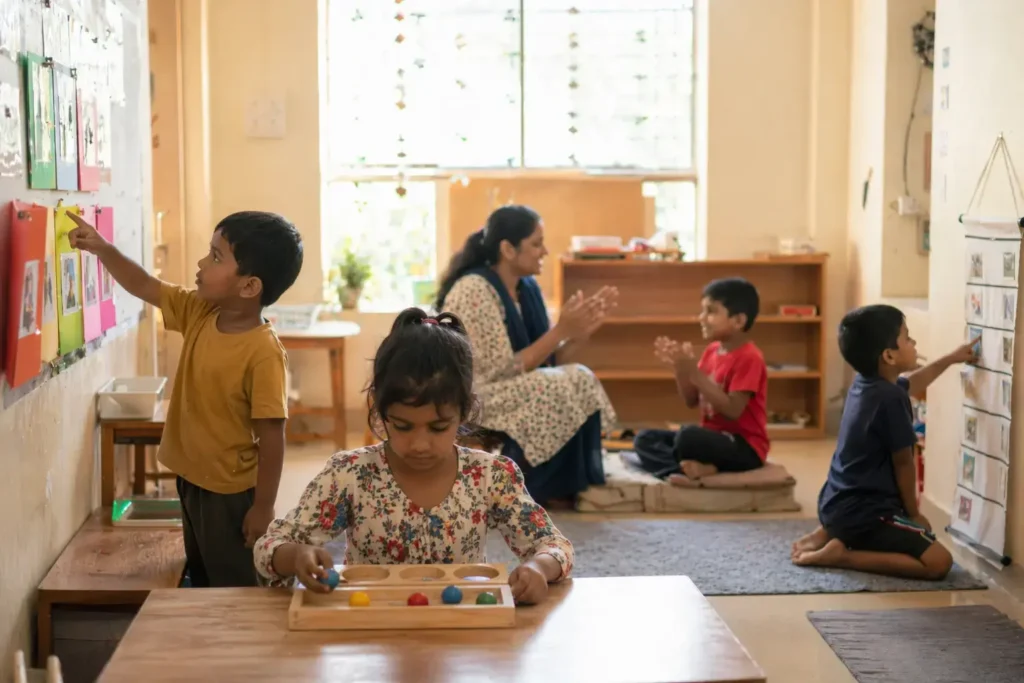
Visual learners: Picture cards, colour-coded routines, and visual timers. Many autistic children fall here.
Kinesthetic learners: Learning through doing. SOREM’s Creative and Physical Growth program channels this directly — sports, yoga, and craft activities are part of the school day, not extras.
Auditory and rhythm-based learners: Music, rhymes, and repetitive instruction anchor new information for many children with intellectual disability.
Routine-based learners: For many autistic children, a predictable structure is itself the teaching tool. Knowing what comes next reduces anxiety and frees cognitive space for actual learning.
How SOREM structures its learning environment
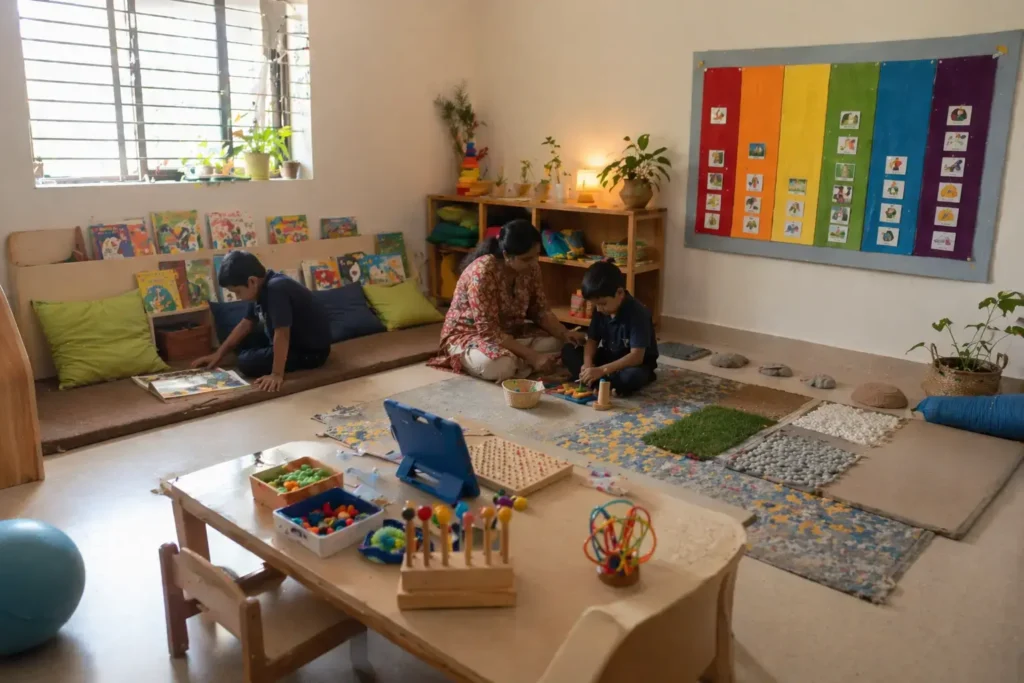
Sensory-safe spaces, structured layouts, and adaptive tools are built into every classroom. Children are not overwhelmed before the lesson begins.
The Labyrinth Walk at SOREM improves mind-motor coordination through walking textured paths. It is research-based, not decorative. SOREM’s collaboration with the Global Autism Project, USA brings Board Certified Behaviour Analysts to review students and train staff three times a year. See our therapies and interventions page.
5 Frequently Asked Questions

Q: How do schools identify a child’s learning style? Through structured observation, standardised assessments, therapist input, and parent feedback. Good IEPs draw from all four.
Q: Should I use a visual schedule at home too? Yes. Children who follow visual schedules at school do better when parents use the same approach. Consistency speeds learning.
Q: My child learns through music. Is this used in special schools? It should be. Music therapy and rhythm-based learning are standard tools in good special education programs.
Q: What is the difference between an IEP and ITP? An IEP covers current learning goals. An ITP covers the move toward adult life. Both should exist for older students.
Q: Does SOREM use the same approach for all autistic children? Contact us to learn how each child’s individual profile shapes their program.