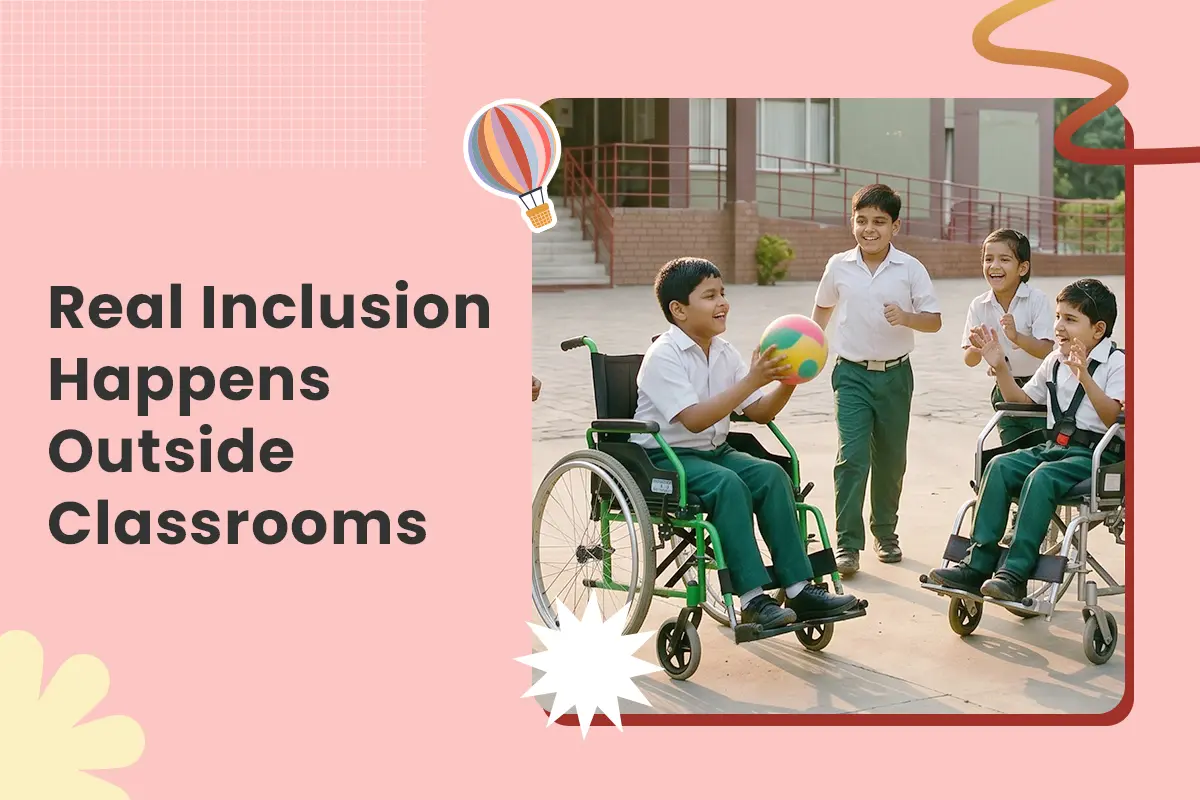
Inclusion is often spoken about as something that happens inside a classroom.
A child sits among peers, participates in activities, and is given access to learning—this is what many believe inclusion looks like.
But true inclusion does not end when the school day is over.
At Sorem Special Children School, we believe that inclusion is not just a place—it is an experience that extends into everyday life.
Because a child who feels included only in school, but excluded everywhere else, is still learning to live in a divided world.
Understanding Inclusion Beyond the Classroom
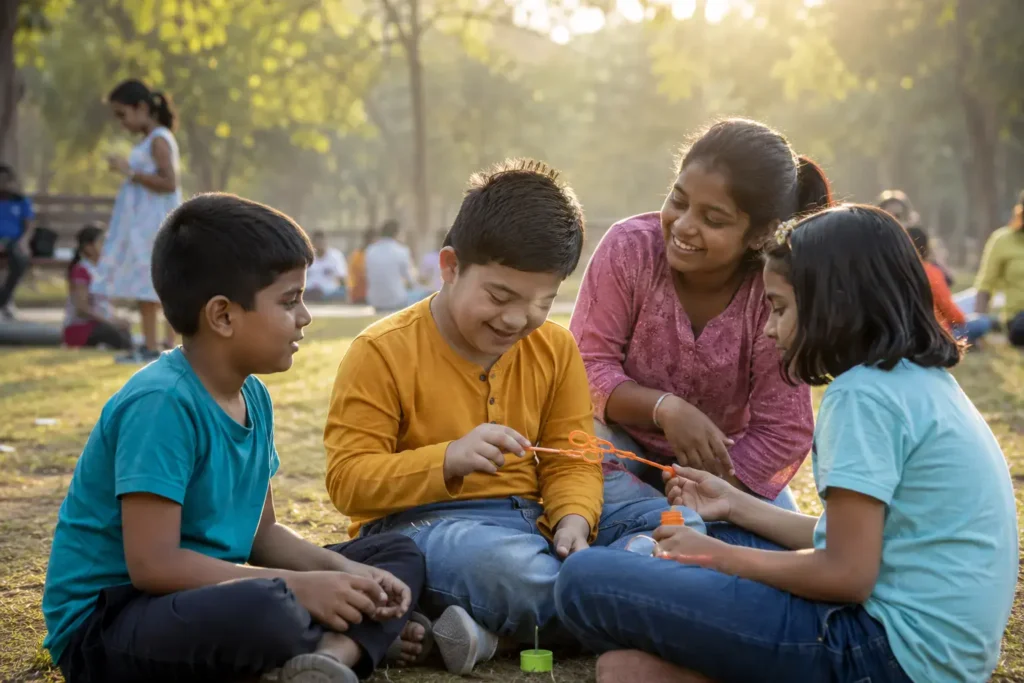
Inclusion is not just about physical presence.
It is about participation, belonging, and acceptance—everywhere.
A child may be included in a classroom but feel left out:
- At the playground
- During family gatherings
- In social situations
- In community spaces
True inclusion means that a child is not just allowed to be present, but is actively valued and engaged in all environments.
Inclusion is not just about physical presence.
It is about participation, belonging, and acceptance—everywhere.
A child may be included in a classroom but feel left out:
- At the playground
- During family gatherings
- In social situations
- In community spaces
True inclusion means that a child is not just allowed to be present, but is actively valued and engaged in all environments.
The Gap Between School and Real Life
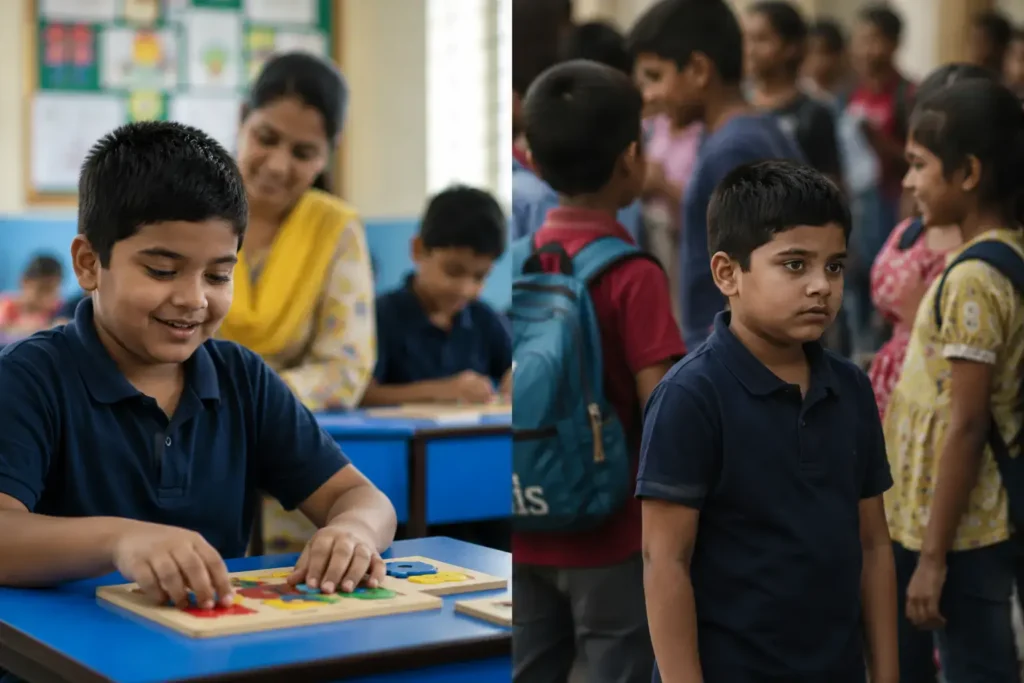
Many children experience structured support in school—teachers guide interactions, activities are adapted, and environments are designed thoughtfully.
But outside school, things often change.
- People may not understand their needs
- Social situations may feel overwhelming
- Opportunities to participate may be limited
This creates a gap where the child feels confident in one space but uncertain in another.
Over time, this inconsistency can affect:
- Social confidence
- Communication
- Sense of belonging
Inclusion, therefore, must move beyond structured settings and become part of everyday life.
What True Inclusion Really Looks Like
True inclusion is not complicated—but it is intentional.
It looks like:
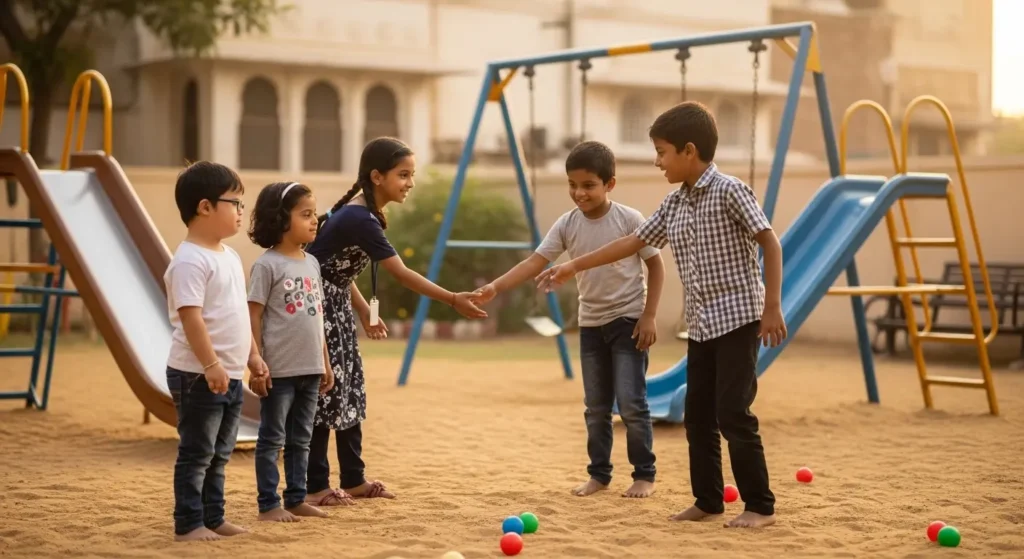
- A child being invited to play, not just allowed to join
- Being given time to express, without interruption or judgment
- Participating in family decisions and conversations
- Being included in outings, celebrations, and daily routines
It is not about making everything perfect.
It is about making sure the child feels they belong.
Because belonging builds confidence in ways that structured learning alone cannot.
Why Inclusion Outside School Matters
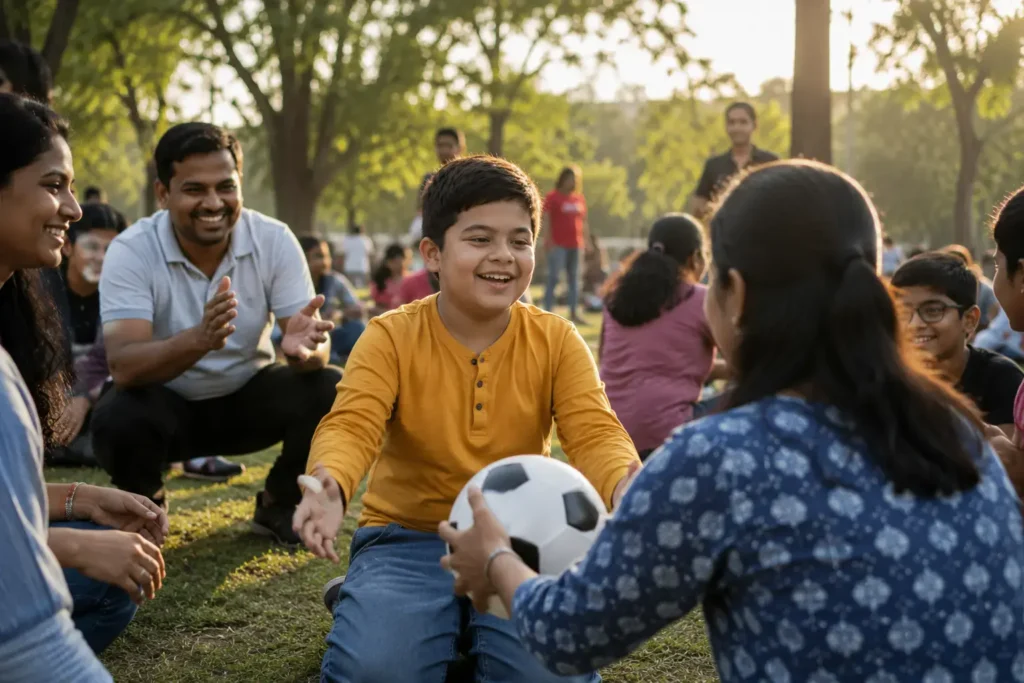
The real world is where children apply what they learn.
When inclusion exists beyond the classroom:
- Social skills become natural
- Communication improves through real interactions
- Confidence grows through everyday experiences
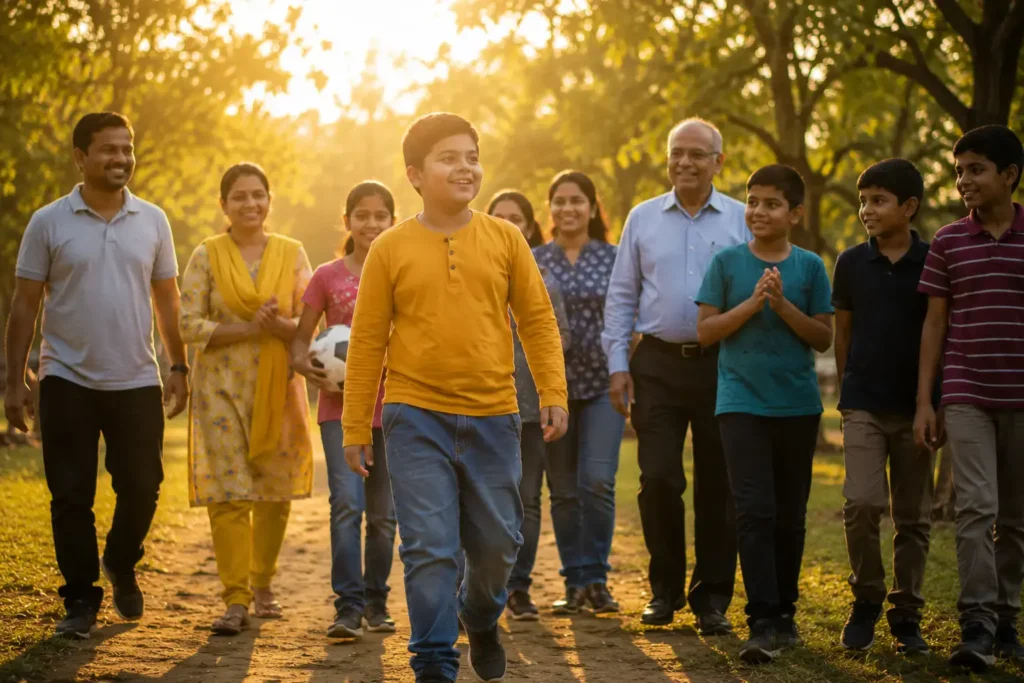
A child who is included at home, in parks, in social gatherings, and in community spaces begins to feel:
“I am part of this world.”
And that feeling is powerful.
It shapes how they see themselves—and how they engage with others.
Overcoming Common Barriers
Inclusion outside the classroom is not always easy.
Challenges may include:
- Lack of awareness
- Social discomfort
- Fear of judgment
- Limited opportunities
But inclusion does not require perfection.
It requires willingness.
Even small steps—like inviting a child to join a game or giving them time to respond—can make a big difference.
The goal is not to remove all challenges, but to ensure the child is not facing them alone.
The Sorem Approach
At Sorem Special Children School, we prepare children not just for academic learning, but for life beyond the classroom.
Our approach focuses on:
- Building confidence that carries into real-world situations
- Encouraging social interaction in meaningful ways
- Supporting families in extending inclusion at home and in the community
Because true success is not measured by what a child can do inside a classroom— but by how confidently they engage with the world outside it.
A Final Thought
Ask yourself:
Is my child only included in structured spaces, or in everyday life as well?
Because inclusion is not just about where a child learns—
it is about where they belong.
And every child deserves to feel that they belong everywhere, not just in certain places.
✨ Inclusion is not a location. It is a feeling that should follow a child wherever they go.